

5.1 Overview
Overview of the Regulatory Framework for Pharmaceuticals and Medical Devices
The principal legislation forming the foundation of the pharmaceutical and medical device regulatory system is the Act on Securing Quality, Efficacy and Safety of Products Including Pharmaceuticals and Medical Devices (commonly referred to as the Pharmaceuticals and Medical Devices Act, or PMD Act).
As pharmaceuticals and medical devices exert direct effects on the human body, they carry significant potential to cause harm to life or health. For this reason, regulation under the PMD Act is deemed necessary.
The degree of regulatory control varies according to the classification of the pharmaceutical or medical device concerned.
| Regulatory Category | Main Classifications and Representative Examples |
|---|---|
| Pharmaceuticals | Prescription medicines |
| Over-the-counter medicines (Pharmacist-supervised medicines; General OTC medicines [Class 1–Class 3]) | |
| In vitro diagnostic pharmaceuticals (e.g., hematological diagnostic reagents) | |
| Quasi-pharmaceuticals | Gargle solutions, insecticides, hair dyes, nutritional tonic drinks |
| Cosmetics | General cosmetic products, shampoos, skincare products |
| Medical Devices | Pacemakers, artificial joints, ultrasound diagnostic imaging systems, surgical scalpels |
| Regenerative Medicine Products | Processed cell-based products (e.g., myocardial cell sheets) |
| Gene therapy products (e.g., products involving administration of functional genes to compensate for genetic deficiencies) |
Pharmaceuticals and medical devices are subject to regulatory oversight at each stage, from research and development through to post-marketing impact. The specific nature of such regulation varies depending on the classification of the product concerned.
| 1 | Development and Clinical Trials | Regulation of clinical trial methodologies and data collection processes to ensure the quality, efficacy, and safety of pharmaceuticals and related products. |
| 2 | Marketing Authorisation Review | The Pharmaceuticals and Medical Devices Agency (PMDA) conducts a scientific review of quality, efficacy, and safety. Following deliberation by the Pharmaceutical Affairs and Food Sanitation Council, marketing authorization is granted by the Minister of Health, Labour and Welfare. |
| 3 | Manufacturing | Regulation of manufacturing and marketing authorization holders from the standpoint of quality assurance. |
| 4 | Distribution and Sales Regulation | Regulation of distribution channels for pharmaceuticals and related products (including pharmacies and retail outlets). Regulation of labelling, including outer packaging and package inserts. |
| 5 | Post-Marketing Safety Measures | Collection of information regarding adverse reactions. Implementation of safety measures to prevent the expansion of adverse effects (including revision of package inserts where necessary). |
| 6 | Regulatory Supervision and Enforcement | Monitoring and enforcement against unapproved or unlicensed pharmaceuticals. Control and removal of defective or non-compliant products. |
| 7 | Relief for Adverse Drug Reactions | Provision of compensation under the Adverse Drug Reaction Relief System and related schemes. (As stipulated under the Act on the Pharmaceuticals and Medical Devices Agency.) |
The fundamental structure of the current pharmaceutical and medical device regulatory system was established through the comprehensive revision of the former Pharmaceutical Affairs Act in 1960, which set out regulations to ensure quality, efficacy, and safety.
Subsequently, a major amendment was enacted in 2013, at which time the legislation was renamed the Act on Securing Quality, Efficacy and Safety of Products Including Pharmaceuticals and Medical Devices. This reform introduced regulatory provisions reflecting the specific characteristics of medical devices and established a formal approval framework for regenerative medicine products.[1]
In recent years, additional provisions have been incorporated, including regulations governing the marketing of regenerative medicine products, emergency approval mechanisms for pharmaceuticals, and the introduction of electronic prescription systems based on an online eligibility verification infrastructure.[2]
Distribution and Pricing of Pharmaceuticals and Medical Devices
Within the broader framework of pharmaceutical and medical device regulation outlined above, this section focuses primarily on distribution (manufacturing and sales) and price determination. Regulatory requirements governing the domestic distribution of pharmaceuticals and medical devices may be categorized into two types: those relating to the product itself and those relating to business operators. Only upon satisfying both categories of regulation may pharmaceuticals and medical devices lawfully be placed on the market.
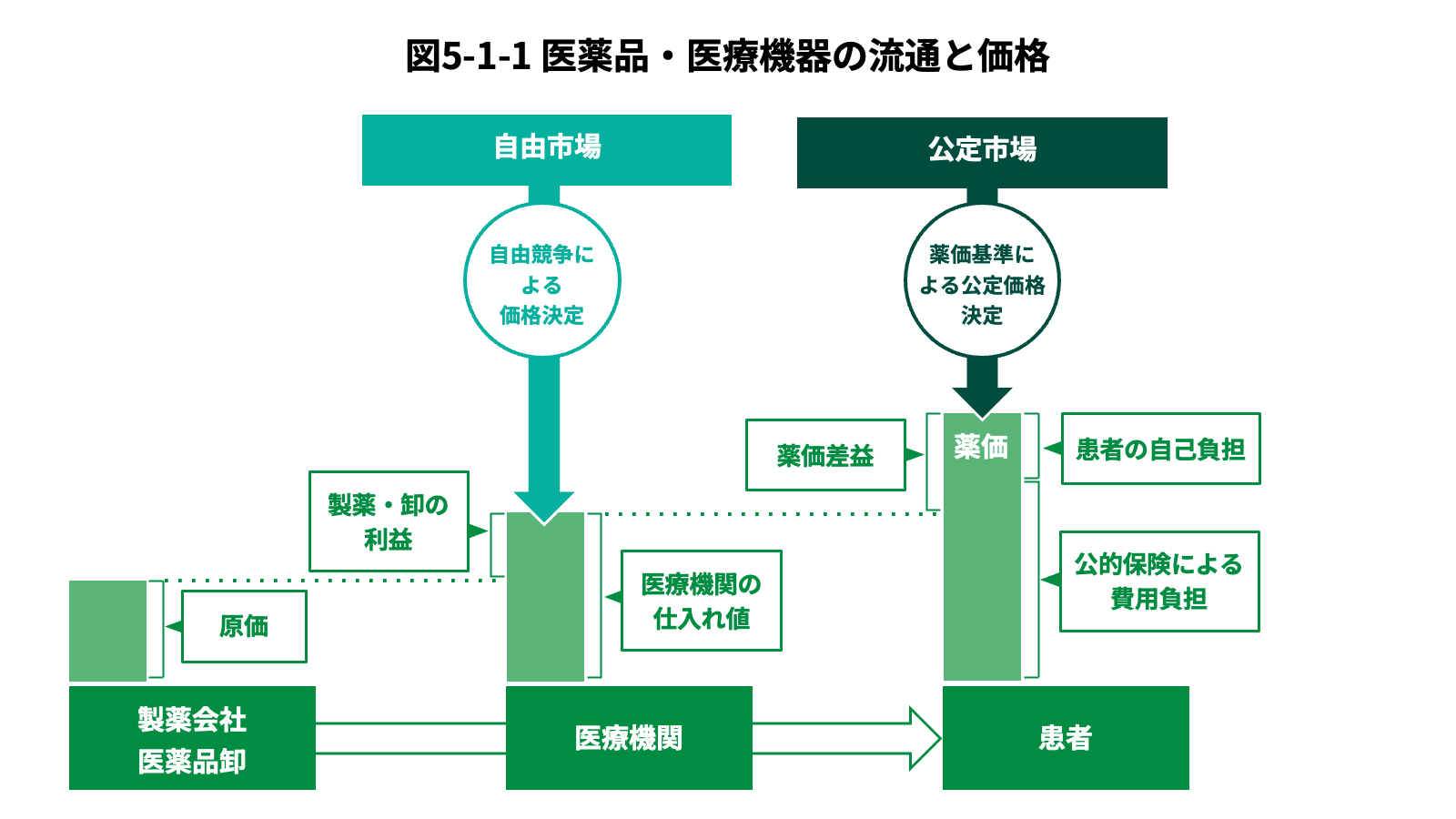
Once products enter the market, their prices are determined either by officially set prices or by the free market. Official prices refer to those applied to pharmaceuticals and medical devices provided under the public health insurance system, with the government determining the reimbursement level. As noted in Section 1.2, the majority of medical care in Japan is delivered within the framework of insured medical services; consequently, prescription pharmaceuticals and medical devices are strongly influenced by government price setting. By contrast, over-the-counter medicines and home-use medical devices that are not covered by public insurance are priced according to market mechanisms.
In practice, insured medical care operates through a combination of free-market pricing and official reimbursement pricing. This dual structure, particularly in relation to pharmaceuticals, has frequently constituted a central issue in health policy reform debates.
Specifically, while medical services provided by hospitals, clinics, and pharmacies to patients are reimbursed at officially determined prices, medical institutions purchase pharmaceuticals from wholesalers at prices determined through market negotiations. Similarly, transactions between wholesalers and pharmaceutical manufacturers are conducted within the free market. In general, prices negotiated in the free market tend to be lower than the official reimbursement prices. Consequently, medical institutions may derive a margin from the difference between the procurement price and the official reimbursement price, commonly referred to as the “drug price margin.”
In light of this, the government has, where such margins are deemed excessive, considered that there is scope to reduce official reimbursement prices and has accordingly implemented price reductions during periodic drug price revisions.
However, in recent years, rising costs of raw materials, labor, and distribution have led in certain cases to situations in which procurement prices exceed official reimbursement prices, a phenomenon often described as a “negative margin.” This development has placed increasing financial pressure on medical institutions.
From Regulatory Approval to Health Insurance Coverage
An overview of the process from regulatory approval to inclusion under the public health insurance system is set out below.
“Regulatory approval” refers to the process under the Pharmaceuticals and Medical Devices Act (PMD Act) by which a pharmaceutical or medical device receives authorization from the regulatory authorities to ensure its quality, efficacy, and safety.
“Health insurance coverage,” by contrast, refers to the subsequent process under the medical insurance system whereby an official reimbursement price is determined, and the product is included within the scope of insured medical treatment.
Further details of each stage are provided in Sections 5.2 onwards, organized by product classification.
- Regulatory Approval
In Japan, any entity seeking to manufacture and market pharmaceuticals or medical devices must apply for approval to the Minister of Health, Labour and Welfare (MHLW). Although formal approval is granted by the Minister, the scientific review of quality, efficacy, and safety is conducted by the Pharmaceuticals and Medical Devices Agency (PMDA), an independent administrative agency. Once approval is granted, the pharmaceutical or medical device may legally be used. - Inclusion under the Public Health Insurance System
Regulatory approval alone does not confer coverage under public health insurance. As discussed in Section 1.2, insured medical care constitutes most of the healthcare provision in Japan. Accordingly, for pharmaceuticals and medical devices to be widely adopted in clinical practice, it is generally crucial that an official reimbursement price be determined and that the product be included within the scope of insurance coverage.- Pharmaceuticals
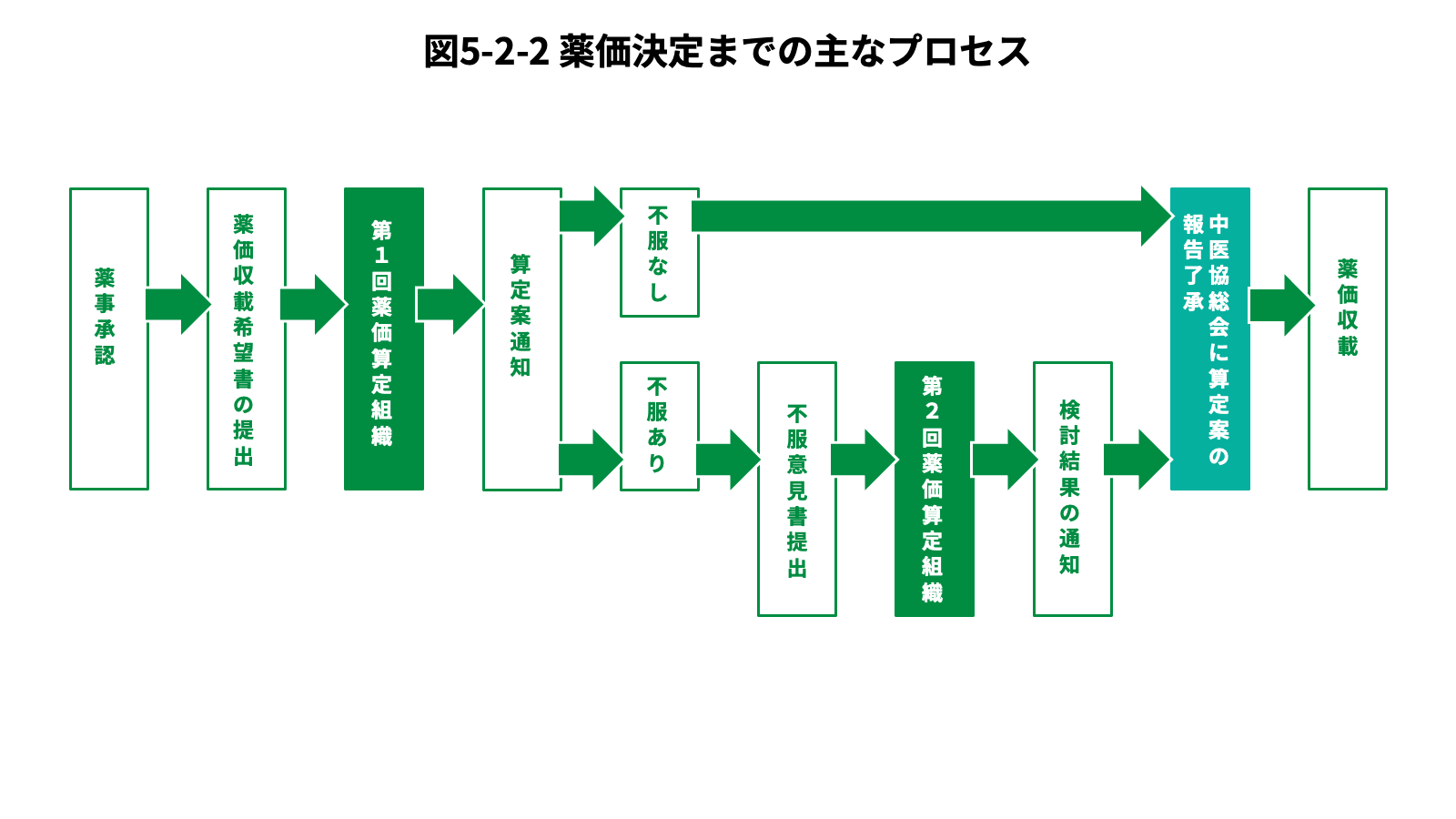
Following regulatory approval, a company seeking reimbursement must submit an application for insurance listing to the MHLW. The Central Social Insurance Medical Council (Chuikyo), an advisory body to the Minister, then assesses and determines the official reimbursement price (the “drug price”).[3] The determined price is added to the Drug Price Standard, the official list of reimbursable pharmaceutical prices, thereby rendering the product eligible for insurance coverage. Drug prices are calculated with reference to:- The prices of existing drugs with similar indications or therapeutic effects; and
- Cost data submitted by the manufacturer.
- Medical Devices
For medical devices, procedures for insurance coverage differ depending on the reimbursement evaluation category assigned to the device. An outline of these categories is provided in Section 5.5. Given the complexity of the evaluation framework, the Ministry of Health, Labour and Welfare recommends confirming the appropriate evaluation category through consultation with the PMDA’s centralized consultation service for Software as a Medical Device (SaMD)[5] and related medical device programs.[6]
- Pharmaceuticals
Market Size of Pharmaceuticals and Medical Devices[7]
Japan accounts for approximately 4.2[8] per cent of the global pharmaceutical market and approximately 5.0[9] per cent of the global medical device market.
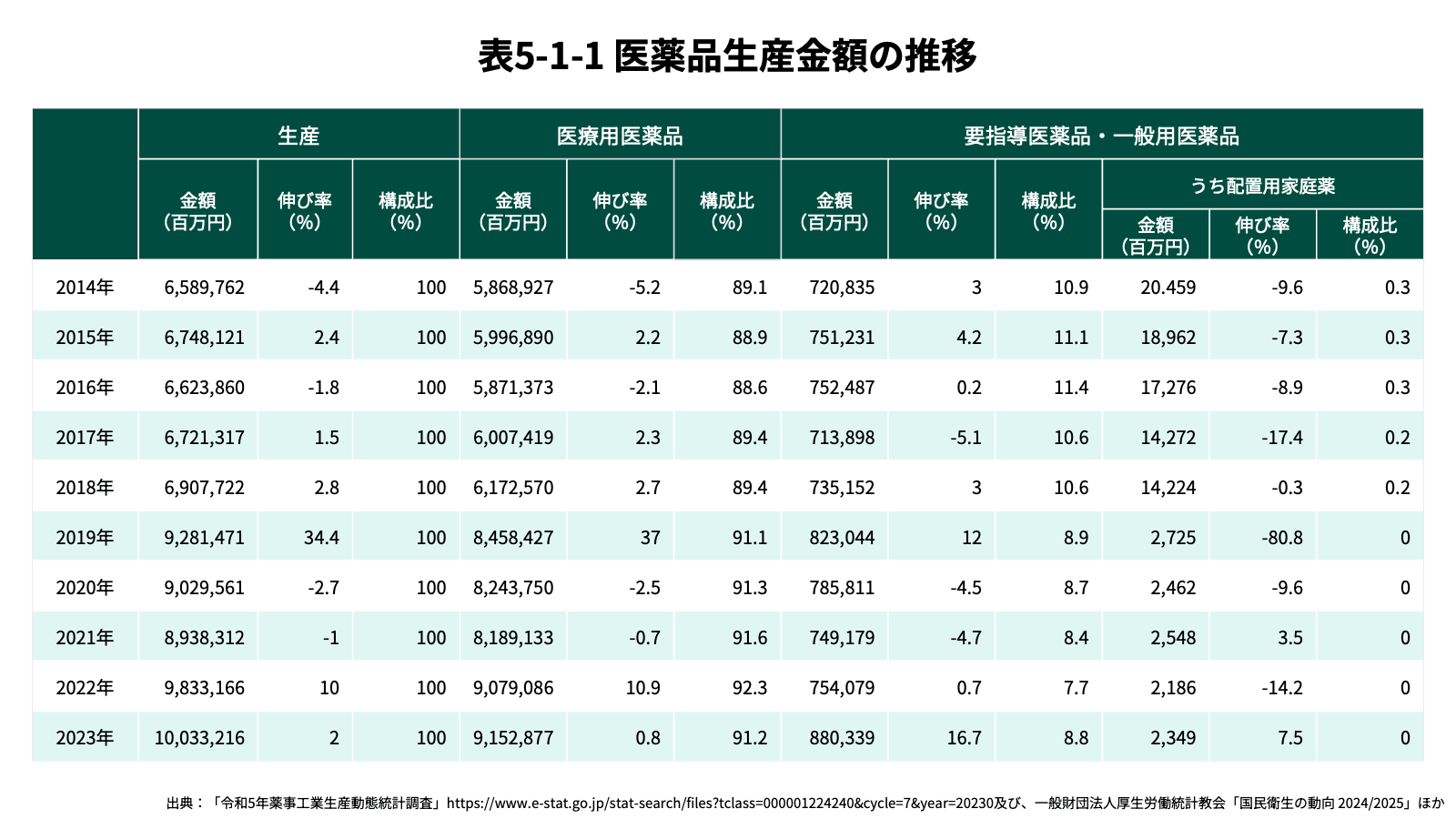
The domestic market for prescription pharmaceuticals in Japan has continued to expand. As of 2023:
- Domestic production amounted to approximately ¥10 trillion[10].
- Imports totalled approximately ¥3.8 trillion.
- Combined, the total market size was just under ¥14 trillion.
The production scale of pharmacist-supervised and general over-the-counter medicines has also been increasing, reaching approximately ¥880 billion. This represents roughly 10 per cent of total domestic pharmaceutical production.
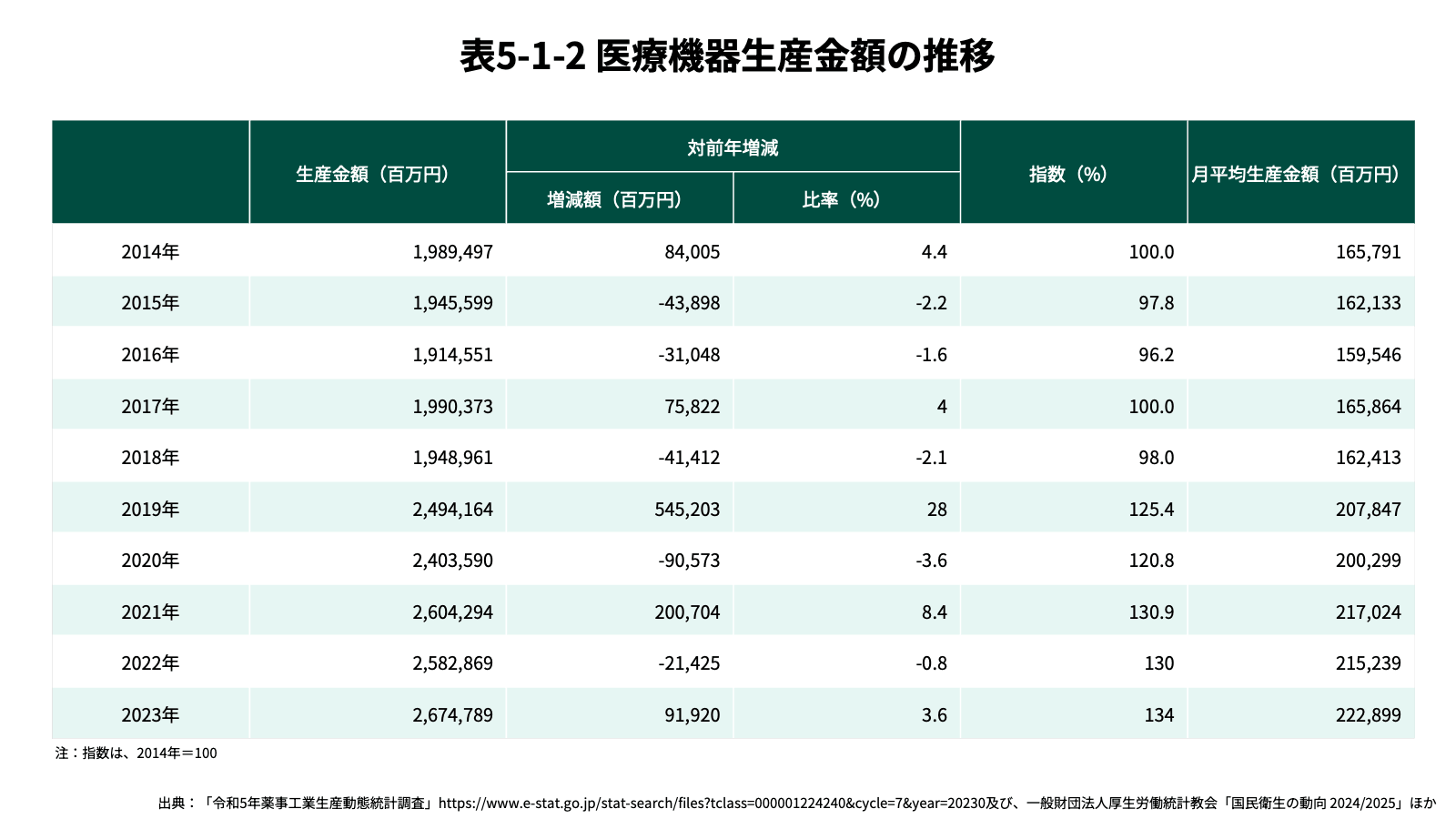
The domestic medical device market has likewise continued to grow. As of 2023:
- Domestic production amounted to approximately ¥2.7 trillion (a year-on-year increase of 3.6 per cent).
- Imports totaled approximately ¥3.3 trillion (a year-on-year increase of 13.8 per cent).
- Combined, the total market size was just under ¥6 trillion.
Compared with pharmaceuticals, the medical device market in Japan exhibits a more import-dependent structural profile.
Pharmaceuticals are broadly categorized into prescription pharmaceuticals and non-prescription (over-the-counter) pharmaceuticals.
Prescription pharmaceuticals are further divided into originator pharmaceuticals and generic pharmaceuticals. The definitions of each are set out below.
| Prescription Pharmaceuticals: Pharmaceutical products supplied for use by a physician or dentist, or for use in accordance with a prescription or instruction issued by such professionals. |
Originator Pharmaceuticals: Pharmaceuticals possessing new indications or therapeutic effects, whose efficacy and safety have been confirmed through clinical trials and other studies, and which have subsequently received regulatory approval.[11] |
| Generic Pharmaceuticals: Pharmaceuticals approved after the expiry of the patent of an originator product, which contain the same active ingredients and specifications as the originator and are recognized as therapeutically equivalent. |
|
| Pharmacist-Supervised Medicines: Pharmaceuticals that do not require a prescription for sale or purchase, but for which face-to-face information provision and guidance by a pharmacist are legally required. Online sales of such products are prohibited. (Further details are provided in Section 5.4 on non-prescription medicines.) |
|
| Non-Prescription (Over-the-Counter) Pharmaceuticals: Pharmaceutical products other than the above. |
— |
From Section 5.2 onwards, this chapter provides a detailed explanation of each pharmaceutical category and medical devices, following the sequence of regulatory approval and subsequent inclusion under the public health insurance system, together with relevant institutional considerations and practical points of note.
- [1] Ministry of Health, Labour and Welfare. (2013). Overview of the Act for Partial Revision of the Pharmaceutical Affairs Act (Act No. 84 of 2013). https://www.mhlw.go.jp/file/06-Seisakujouhou-11120000-Iyakushokuhinkyoku/0000066816.pdf
- [2] Yonemura, S. (n.d.). Lectures on medical law (2nd ed.). Health, Labour and Welfare Statistics Association. (2024). Health and welfare statistics in Japan 2024/2025 (Trends in national health).
- [3] Ministry of Health, Labour and Welfare. (2024). Drug price standard listing and information on generic drugs (valid until March 31, 2025). https://www.mhlw.go.jp/topics/2024/04/tp20240401-01.html
- [4] On the other hand, certain pharmaceuticals that are not intended to treat life-threatening conditions but are used primarily to improve quality of life are referred to as “lifestyle improvement drugs” and are generally not covered by public health insurance.
- [5] Pharmaceuticals and Medical Devices Agency. (n.d.). SaMD one-stop consultation service (comprehensive consultation for medical device software). https://www.pmda.go.jp/review-services/f2f-pre/strategies/0011.html
- [6] Ministry of Health, Labour and Welfare. (2024). Guidebook on health insurance coverage for medical devices and in vitro diagnostics in FY2024. https://www.mhlw.go.jp/content/10800000/001073851.pdf
- [7] Ministry of Health, Labour and Welfare. (2023). Annual pharmaceutical industry production statistics survey (2023). https://www.e-stat.go.jp/stat-search/files?tclass=000001224240&cycle=7&year=20230 Health, Labour and Welfare Statistics Association. (2024). Health and welfare statistics in Japan 2024/2025 (Trends in national health).
- [8] IQVIA Institute for Human Data Science. (n.d.). Global use of medicines: Outlook through 2029.
- [9] Ministry of Economy, Trade and Industry Medical Device Industry Vision Study Group. (2024). Medical device industry vision 2024.
- [10] Although the figures for 2023 appear to show a significant increase, this is largely attributable to changes in the statistical survey methodology, including a substantial improvement in the response rate.
- [11] Ministry of Health, Labour and Welfare. (2025). Drug price standard listing and information on generic drugs (effective August 14, 2025). https://www.mhlw.go.jp/topics/2025/04/tp20250401-01.html
5.2 Originator Pharmaceuticals
Definition of Originator Pharmaceuticals
An originator pharmaceutical (new pharmaceutical product) is defined under Article 14-4 of the Pharmaceuticals and Medical Devices Act as a pharmaceutical product that clearly differs from already approved pharmaceuticals in terms of active ingredient, quantity, dosage and administration, indications, or therapeutic effects.
This category primarily includes:
- Pharmaceuticals containing new active ingredients
- New combination prescription products
- Pharmaceuticals with new routes of administration
- Pharmaceuticals with new indications
- Pharmaceuticals with new dosage forms
- Pharmaceuticals with new dosage strengths[12]
Approval of Prescription Pharmaceuticals
In order for a pharmaceutical company to manufacture, distribute, and market a new pharmaceutical product, the following steps are required.
First, marketing authorization must be obtained. The Pharmaceuticals and Medical Devices Agency (PMDA) conducts a scientific review and grants approval based on an evaluation of efficacy and safety data derived from clinical trials.
Clinical trial data and submitted documentation must comply with standards established by the MHLW, including:
- Good Laboratory Practice (GLP), governing non-clinical studies concerning quality and safety; and
- Good Clinical Practice (GCP), governing the conduct of clinical trials.
The PMDA has established a target total review period of 12 months from the date of application acceptance to approval under the standard review process.[13]
Following a positive review by the PMDA, the MHLW formally seeks advice from the Pharmaceutical Affairs and Food Sanitation Council. Based on the Council’s recommendation, the Minister determines whether to grant final approval.
Expedited and Special Approval Pathways
In addition to the standard approval process, the MHLW has introduced mechanisms to prioritize the review and approval of innovative pharmaceuticals.
1. Sakigake Designation System (Introduced in 2014)
In 2014, Japan introduced the Sakigake Designation System to provide patients with the world’s most advanced therapies at the earliest possible stage. This system grants priority and accelerated review to pharmaceutical products that are developed in Japan and for which the first marketing authorization application is submitted in Japan.
To qualify, a new pharmaceutical must meet the following four criteria:
- Innovative therapeutic characteristics
- Seriousness of the target disease
- Outstanding efficacy in relation to the target disease
- Commitment and capacity to pursue early development and application in Japan ahead of the rest of the world[14]
2. Conditional Early Approval System (Introduced in 2017)
In 2017, Japan introduced the Conditional Early Approval System for pharmaceuticals intended to treat diseases characterized by a small patient population, limited treatment options and difficulty in conducting confirmatory clinical trials, in which significant unmet medical needs exist. Under this system, pharmaceutical companies may apply for approval based on clinical data demonstrating a certain level of efficacy and safety, even if confirmatory clinical trials have not yet been completed. Approval is granted on the condition that post-marketing studies and investigations are conducted to reconfirm efficacy and safety.
Several pharmaceutical products have already been approved under this framework.[15]
Safety and Quality of Prescription Pharmaceuticals
As in other major jurisdictions, the development, manufacture, and marketing of pharmaceuticals in Japan are governed by regulatory standards collectively referred to as GxP (Good Practice standards). These include:
- GLP (Good Laboratory Practice) for non-clinical studies;
- GCP (Good Clinical Practice) for clinical trials;
- GMP (Good Manufacturing Practice) for manufacturing and quality control at production sites; and
- GVP (Good Vigilance Practice) for post-marketing safety management.
Together, these standards regulate the entire lifecycle of pharmaceuticals, from development to manufacturing control.
At the same time, Japan’s regulatory framework contains several distinctive features concerning product quality and safety.
1. The “Three Responsible Officers” (San’yaku) System
Under the Pharmaceuticals and Medical Devices Act, in order to comply with Good Quality Practice (GQP) and GVP requirements for pharmaceuticals, quasi-pharmaceuticals, cosmetics, and regenerative medicine products, pharmaceutical companies are required to appoint three responsible officers who oversee and control activities related to product quality and safety.[16]
These are commonly referred to as the “three key officers”:
- General Marketing Compliance Officer
(Seikatsu Seizō Hanbai Sekininsha) The individual who bears overall responsibility for quality management and post-marketing safety management operations. - Quality Assurance Manager
A person capable of appropriately and effectively conducting quality control operations in accordance with GQP requirements. - Safety Manager
A person capable of appropriately and effectively conducting safety assurance operations in accordance with GVP requirements.
2. Early Post-Marketing Surveillance (Immediate Post-Marketing Study)[17]
Following approval of a new pharmaceutical, an early post-marketing surveillance program is mandatory.
After approval, the MHLW requires the marketing authorization holder to conduct post-marketing surveillance activities to monitor and ensure patient safety. This surveillance is typically conducted for six months following market launch.
The purpose of this surveillance, conducted in accordance with Good Post-marketing Study Practice (GPSP), is to detect serious adverse reactions that may not have been observed during clinical trials but could emerge in real-world clinical use.[18]
3. Initial Prescription Period Restriction
To further safeguard patient safety, newly listed pharmaceuticals are, in principle, subject to a restriction limiting prescriptions to a maximum of 14 days during the first year following listing in the reimbursement schedule.
However, the Central Social Insurance Medical Council (Chuikyo) may grant exceptions for pharmaceuticals that meet either of the following criteria[19]:
- A new pharmaceutical containing an active ingredient that has substantially the same indications, dosage, and administration as an already listed product with more than one year of clinical use experience (e.g., certain new combination prescription products); or
- A pharmaceutical for which, due to disease characteristics or formulation properties, only dosage forms exceeding 14 days’ supply exist, and for which safety beyond a 14-day administration period has been confirmed.
Determination of Drug Prices for Originator Pharmaceuticals[20]
The “drug price” refers to the amount determined for each branded pharmaceutical as the average per-unit cost required by insured medical institutions and pharmacies to supply the drug. This amount corresponds to the reimbursement paid to such institutions for pharmaceuticals used in patient treatment.
After obtaining marketing approval, the manufacturer submits an application for price listing to the Minister of Health, Labour and Welfare. Following necessary adjustments, the proposed price is reported to and approved by the plenary session of the Central Social Insurance Medical Council (Chuikyo). The pharmaceutical becomes eligible for insurance coverage upon listing in the Drug Price Standard.
Initial Determination of Drug Prices
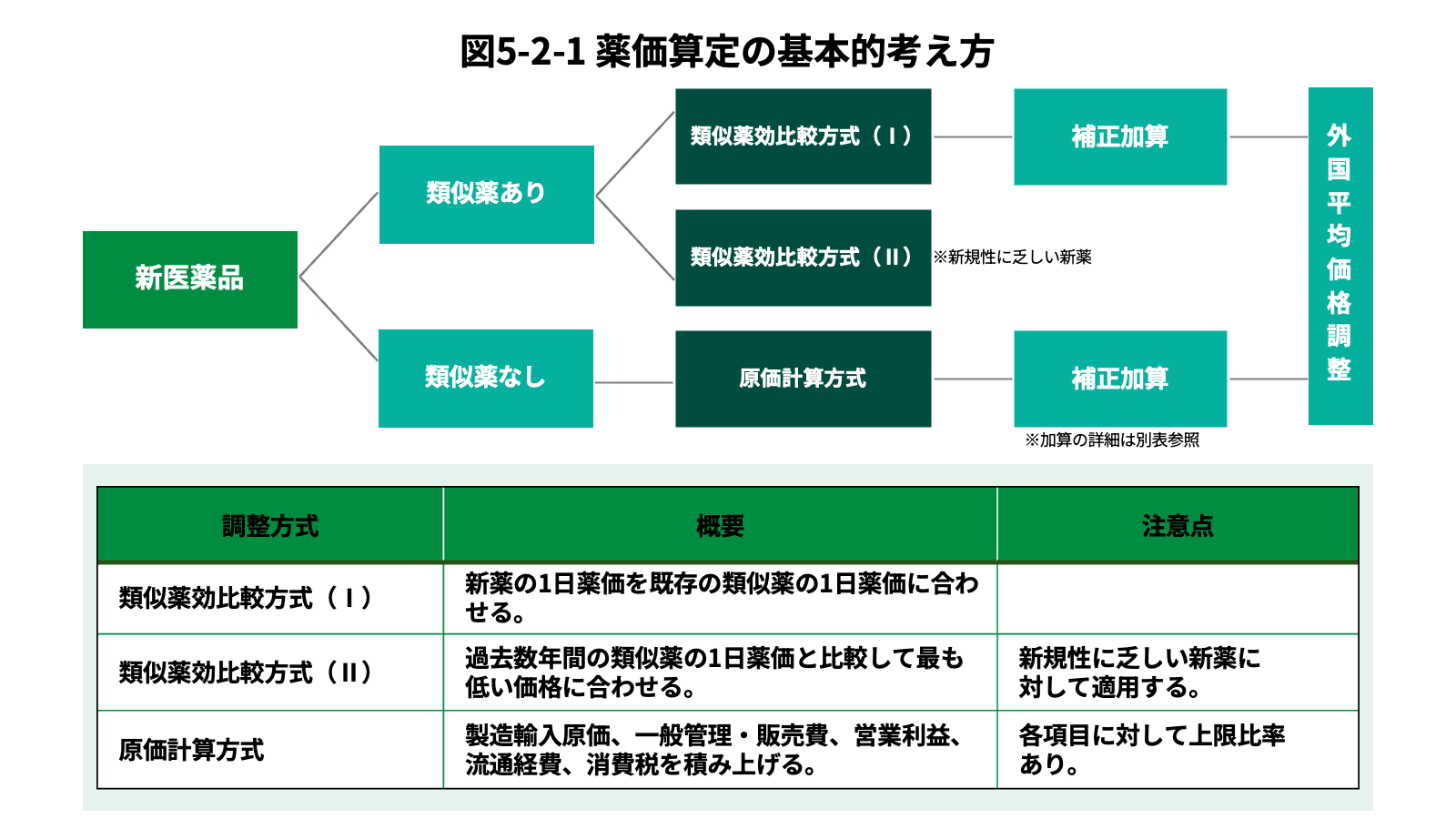
At the time of initial listing, drug prices are determined according to one of two principal methods:
- Similar Efficacy Comparison Method: Applied when comparable pharmaceuticals with similar therapeutic effects already exist on the market.
- Cost Calculation Method: Applied when no comparable approved pharmaceutical exists.[21]
In addition, in order to restrain prices of pharmaceuticals assessed as having limited innovativeness while incentivizing the development of highly innovative products, a system of premium price adjustments (corrective add-on premiums) has been introduced[22][23]. Furthermore, to ensure fair market competition, a Foreign Average Price Adjustment mechanism is applied in cases where, under the cost calculation method or in cases lacking comparable pharmacological products, the Japanese price deviates significantly from the average foreign price (defined as 1.25 times or more, or 0.75 times or less, of the average foreign price). In such cases, price adjustments are implemented accordingly.[24]
| Type of Premium | Overview | Premium Rate |
|---|---|---|
| Breakthrough Premium | Applied to pharmaceuticals demonstrating a novel mechanism of action, high efficacy and safety, and a significant improvement in methods of treating disease | 70–120% |
| Usefulness Premium | Applied to pharmaceuticals demonstrating high efficacy and safety and/or improvement in therapeutic methods | 5–60% |
| Marketability Premium | Applied to products such as orphan drugs for rare diseases | 5–20% |
| Pediatric Premium | Applied where pediatric dosage and administration are explicitly included in the approved indications | 5–20% |
| Specific Use Premium | Applied where high usefulness is recognized for a specific therapeutic use | 5–20% |
| Sakigake (Pioneer) Premium | Applied where high usefulness is recognized for a pioneering or first-in-class therapeutic use | 10–20% |
| Rapid Introduction Premium[25] | Applied where an innovative new drug has been introduced promptly into the Japanese market | 5–10% |
Types of Premiums (Corrective Add-On) Price Adjustments
Drug Price Revisions for Originator Pharmaceuticals
The following provides an overview of price revisions after a pharmaceutical has been listed in the Drug Price Standard.
Drug price revisions are conducted once annually, primarily on the basis of the divergence between market transaction prices and the official reimbursement price.[26]
More specifically, the revised drug price is calculated by taking the weighted average of actual transaction prices obtained through nationwide drug price surveys of insured medical institutions, pharmacies, and pharmaceutical wholesalers, and then adding:
- An adjustment margin to ensure stable distribution; and
- Consumption tax.
Seeing as the difference between the official reimbursement price and the actual market price constitutes revenue for medical institutions and pharmacies, the official drug price is revised to a level equal to the weighted average of actual market prices plus a fixed adjustment margin of 2 per cent.[27]
In other words, where the divergence between the official drug price and the weighted average market price exceeds 2 per cent, the price is revised by the amount of that difference.
In principle, this revision mechanism exerts downward pressure on pharmaceutical prices. Through this system, the Ministry of Health, Labour and Welfare effectively restrains overall medical expenditure.
In addition to standard annual price revisions, Japan has established supplementary recalculation mechanisms. These are applied in cases where market size has expanded substantially beyond initial projections or patent protection has expired (see the table below).[28]
Such measures reduce the prices of relevant pharmaceuticals to contain overall healthcare expenditure. At the same time, the system seeks to preserve reasonable profit margins to encourage continued investment in innovative drug development.
Against the backdrop of sustained growth in healthcare expenditure, further reforms to the drug pricing system are anticipated in the future.
| Recalculation Category | Direction | Explanation |
|---|---|---|
| Additional Price Reduction for Long-Listed Products | Reduction | Applies additional price reductions to long-listed products (off-patent originator drugs). The resulting savings serve as a financial source for price increases designed to promote innovative drug development. |
| Market Expansion Recalculation | Reduction | Where annual sales significantly exceed projected sales, the drug price is reduced under specified conditions. Products falling within therapeutic areas pre-designated by the Central Social Insurance Medical Council (Chuikyo) are exempt from this recalculation. |
| Indication Change Recalculation | Reduction | Where the principal indication or therapeutic effect of a pharmaceutical has been changed, and comparable drugs exist for the new primary indication, the price is recalculated so as to align more closely with the price of similar drugs indicated for the revised use. |
| Dosage and Administration Change Recalculation | Product-dependent | Where changes are made to the dosage and administration relating to the principal indication, the price is recalculated so that the daily drug cost remains equivalent before and after the revision. |
| Unprofitable Product Recalculation | Increase | For pharmaceuticals recognized as highly necessary for insured medical care but whose prices are so low that continued manufacture and marketing would be difficult, prices are recalculated using the cost-based method. In such cases, the operating profit margin is capped at 5 per cent. |
| Premium for Promotion of New Drug Creation and Resolution of Off-Label Use | Increase | To promote the creation of innovative new drugs and address drug lag/loss, scheduled price reductions based on market transaction prices may be deferred. Application requires fulfilment of both corporate eligibility criteria and product-specific requirements. |
In addition, since 2019, a cost-effectiveness evaluation system has been introduced.
This system primarily targets pharmaceuticals and medical devices with a large market scale or exceptionally high unit prices and adjusts a portion of their reimbursement prices from the perspective of balancing costs and clinical effectiveness.
- [12] Pharmaceuticals and Medical Devices Agency. (n.d.). New drugs (ethical drugs). https://www.pmda.go.jp/review-services/drug-reviews/about-reviews/p-drugs/0021.html
- [13] Pharmaceuticals and Medical Devices Agency. (n.d.). Timeline in the standard review process for new drug approvals. https://www.pmda.go.jp/review-services/drug-reviews/about-reviews/p-drugs/0014.html
- [14] Ministry of Health, Labour and Welfare. (n.d.). Overview of the Sakigake designation system. https://www.mhlw.go.jp/stf/seisakunitsuite/bunya/kenkou_iryou/iyakuhin/tp150514-01_00001.html
- [15] Ministry of Health, Labour and Welfare. (n.d.). Conditional approval system for pharmaceuticals. https://www.mhlw.go.jp/content/10601000/000954228.pdf
- [16] Ministry of Health, Labour and Welfare. (n.d.). Points to note regarding the appropriate implementation of duties by the three key roles in marketing authorization holders (Appendix). https://www.mhlw.go.jp/content/11120000/000804704.pdf
- [17] Ministry of Health, Labour and Welfare. (n.d.). Implementation methods for early post-marketing phase vigilance for prescription drugs. https://www.mhlw.go.jp/content/11120000/000945083.pdf
- [18] Pharmaceuticals and Medical Devices Agency. (n.d.). Information on early post-marketing phase vigilance. https://www.pmda.go.jp/review-services/drug-reviews/review-information/p-drugs/0006.html
- [19] Ministry of Health, Labour and Welfare. (n.d.). Handling of prescription duration limits for new drugs (p. 4). https://www.mhlw.go.jp/content/12404000/001242877.pdf
- [20] Ministry of Health, Labour and Welfare, Health Bureau. (2025). Standards for drug price calculation (issued February 19, 2025). https://www.mhlw.go.jp/content/12404000/001416107.pdf
- [21] Ministry of Health, Labour and Welfare. (n.d.). Overview of the current drug pricing system. https://www.mhlw.go.jp/content/10808000/001276014.pdf
- [22] Ministry of Health, Labour and Welfare. (n.d.). Overview of the current drug pricing system. https://www.mhlw.go.jp/content/10808000/001276014.pdf
- [23] In this context, irrespective of whether the drug price is calculated using the comparable method or the cost accounting method, it is subject to adjustment premiums.
- [24] Ministry of Health, Labour and Welfare. (n.d.). Overview of the current drug pricing system. https://www.mhlw.go.jp/content/10808000/001276014.pdf
- [25] This is a premium newly introduced in fiscal year 2024. For further details, see the Ministry of Health, Labour and Welfare, Overview of the Current Drug Pricing System.
- [26] Strictly speaking, drug price revisions in odd-numbered fiscal years (so-called interim revisions) were introduced in FY2021. However, compared with the main revisions conducted in even-numbered years, the scope of applicable drug pricing rules was initially limited. In recent years, revisions in odd-numbered fiscal years have increasingly come to approximate the pricing rules applied during the main revisions in even-numbered years (Ministry of Health, Labour and Welfare, 2025). Ministry of Health, Labour and Welfare. (2025). Drug price revision for FY2025 (reference materials). https://www.mhlw.go.jp/content/10808000/001360022.pdf
- [27] Ministry of Health, Labour and Welfare. (n.d.). Overview of the current drug pricing system. https://www.mhlw.go.jp/content/10808000/001276014.pdf
- [28] Ministry of Health, Labour and Welfare. (n.d.). Overview of the current drug pricing system. https://www.mhlw.go.jp/content/10808000/001276014.pdf
5.3 Generic Medicines
Definition of Generic Medicines
Generic medicines are defined as pharmaceutical products that are approved after the expiry of the patent of an originator (brand-name) drug, and which contain the same active ingredients and specifications as the originator, having been demonstrated to be therapeutically equivalent.
Originator medicines are granted a period of market exclusivity under the patent system, including both the duration of patent protection and the re-examination period during which their efficacy and safety are evaluated. Once this period has expired, applications for the approval and subsequent marketing of generic medicines become permissible.
While generic medicines are, in principle, identical to originator medicines in terms of indications, dosage, and administration, they are characterized by significantly lower prices. Furthermore, whereas originator medicines are typically manufactured and marketed exclusively by the original developer, generic medicines are often produced and distributed by multiple manufacturers.[29]
Approval of Generic Medicines
Unlike originator medicines, the manufacture and marketing of generic medicines do not require the conduct of full clinical trials to verify efficacy and safety. However, even when medicines contain the same active ingredients, differences in manufacturing processes may affect their performance. Therefore, regulatory authorities assess whether generic medicines are equivalent to originator medicines in terms of efficacy and safety.
The approval process primarily focuses on three key elements: specifications and test methods, stability testing, and bioequivalence studies. If these assessments demonstrate equivalence with the originator product, the generic medicine is deemed to meet the required standards of efficacy and safety and is subsequently approved.
In recent years, cases of misconduct relating to approval of application data, as well as quality issues arising from deficiencies in manufacturing and quality control systems, have attracted significant public attention in relation to generic medicines. Since 2021, new regulatory requirements have been introduced to clarify the responsibilities of applicants and to ensure the reliability of submission data. These include the mandatory submission of documentation explaining the reliability of application data, as well as verification of staffing arrangements and their appropriateness at manufacturing sites.[30] Careful attention to these requirements is therefore essential.
Pricing of Generic Medicines[31]
Seeing as generic medicines do not require extensive clinical trials, their research and development costs are substantially lower than those of originator medicines. This enables pharmaceutical companies to set lower prices while still maintaining profitability.
Within Japan’s public health insurance system, the reimbursement price of generic medicines is typically set at a significantly lower level, generally 50% or less of the price of the originator medicine.
In addition, reimbursement prices are determined with reference to prevailing market prices. Consequently, when multiple generic products containing the same active ingredient are available and price competition arises, this is reflected in the setting of even lower reimbursement prices.
Generic medicines are listed on the National Health Insurance drug price list twice annually (in June and December). When a generic medicine is first listed, its price is generally set at 50% of the originator medicine’s price, subject to two exceptions:
- For oral medicines, if the number of products seeking listing exceeds ten, the price is set at 40% of the originator medicine’s price.
- For biosimilars, the price is set at 70% of the originator medicine’s price.
If generic medicines have already been listed, newly listed products are priced at the same level as the lowest-priced existing generic.
Furthermore, after initial listing, drug prices are gradually reduced through annual revisions based on changes in actual market prices. In cases where multiple generic medicines exist, a system is applied in which products are grouped into price bands, and a single weighted average price is assigned within each band:
- Products priced below 30% of the highest price are grouped into one price category (weighted average)
- Products priced between 30% and below 50% of the highest price are grouped into another category
- Products priced at 50% or above are grouped into a separate category
In recent years, additional measures have been introduced to reduce price variation, including consolidating products into a single price band in principle after 12 years from listing, and preventing price increases resulting from such consolidation. These measures are designed to ensure a continued downward trend in prices.
Prescription and Dispensing of Generic Medicines
As noted above, the MHLW has actively promoted the use of generic medicines through policy targets. Under Japan’s public health insurance system, physicians are, in principle, required to prescribe medicines using their generic (non-proprietary) names.
Pharmacies are encouraged to dispense generic medicines, provided that there are no specific instructions from the prescribing physician after obtaining patient consent. Incentive schemes have also been introduced for pharmacies that actively dispense generic medicines.
However, physicians retain the authority to specify that substitution with a generic medicine should not occur, by signing or otherwise indicating this on the prescription.
A comparable system is observed in France, where patients who refuse substitution with generic medicines must pay the full cost at the pharmacy and subsequently apply for reimbursement, thereby strongly encouraging the use of generics.
By contrast, a different system operates in United States, where the range of medicines available is determined by the patient’s insurance plan. As a result, physicians and pharmacies have less discretion, and decisions regarding which medicines are covered are negotiated between insurers, such as Health Maintenance Organizations (HMOs), and pharmaceutical companies.
Industrial Policy on Generic Medicines
The Japanese government has adopted a policy of promoting the use of generic medicines in order to sustain the universal health insurance system[32] while ensuring the quality and efficiency of healthcare delivery.
Specifically, in the Cabinet decision of June 2021 (Basic Policy on Economic and Fiscal Management and Reform 2021), a target was set to achieve a generic medicine volume share of at least 80% in all prefectures by the end of fiscal year 2023. As of March 2023, 36 prefectures had achieved this target.
In addition, a new target based on value share has been established: by the end of fiscal year 2029, the proportion of total expenditure on generic medicines relative to the combined expenditure on generics and originator medicines with generic equivalents is to reach 65%.[33] It is anticipated that policies promoting the use of generic medicines will continue to be strengthened in the coming years.
- [29] Against this background, in Europe and the United States, these medicines are commonly referred to as “generic drugs,” as they are more frequently prescribed by their generic (non-proprietary) names, in contrast to originator drugs, which are often identified by brand names. This terminology has also been adopted in Japan, where they are referred to as “generic medicines.”
- [30] Ministry of Health, Labour and Welfare. (2021). New measures in the approval review process for generic drugs (Notification No. Yakuseiyaku-Shinsa 0702-7; Yakusei-Kanmaku 0702-7, issued July 2, 2021). https://www.pmda.go.jp/files/000250546.pdf
- [31] This section summarises the key aspects of price revisions for generic drugs, based on the Ministry of Health, Labour and Welfare’s Drug Price Revision for FY2024 (4): Generic Drugs and Long-Listed Drugs (Ministry of Health, Labour and Welfare, 2024).
- [32] As a background factor, Japan’s universal health insurance system enables all citizens to receive necessary and high-quality healthcare with a certain level of out-of-pocket payment. However, due to factors such as advances in medical technology and rapid population ageing, healthcare expenditures have continued to rise, placing increasing pressure on healthcare financing and raising concerns about the sustainability of the universal health insurance system.
- [33] Ministry of Health, Labour and Welfare. (2024, September 30). Roadmap for the appropriate use of generic drugs with a focus on ensuring stable supply. https://www.mhlw.go.jp/bunya/iryou/kouhatu-iyaku/dl/roadmap04.pdf
5.4 Over-the-Counter (OTC) Medicines
Distinction between Prescription Medicines and OTC Medicines
In addition to prescription medicines discussed in Section 5.2 and 5.3, there exist non-prescription medicines that can be purchased directly by the general public at pharmacies and drugstores and used at their own discretion.[34] These include general sale medicines and pharmacist-guided medicines, which are collectively referred to as over-the-counter (OTC) medicines.
General sale medicines are defined as pharmaceutical products other than prescription medicines (excluding pharmacist-guided medicines). In other words, they are medicines that can be purchased by the general public and used based on individual judgement. In most cases, these products contain ingredients that are considered sufficiently safe for such use.[35]
In recent years, Japan has permitted the online sale of general sale medicines. As these products can be selected and used by consumers independently, sellers are legally required to provide appropriate information to purchasers. Based on risk classification, these medicines are categorized into three groups: Class 1, Class 2, and Class 3. Each class has differing levels of required information provision:
- Class 1 medicines: These are medicines for which safety as general sale products has not yet been fully established, or where risks remain uncertain, as well as those that may cause adverse effects that could significantly interfere with daily life. The provision of information by a pharmacist is mandatory, and these medicines may only be sold or dispensed under the supervision and guidance of a pharmacist.
- Class 2 medicines: These are medicines that may cause side effects that could interfere with daily life. They may be sold under the supervision of either a pharmacist or a registered sales clerk, and the provision of information is required on a best-efforts basis.
- Class 3 medicines: These include all other medicines with relatively low risk. There are minimal legal requirements for providing product explanations at the point of sale unless specifically requested by the purchaser.
Pharmacist-Guided Medicines
Pharmacist-guided medicines were introduced as a new category following the 2013 revision of the Pharmaceuticals and Medical Devices Act.[36]
These medicines may be used at the patient’s discretion; however, they require face-to-face guidance and information provision by a pharmacist at the time of sale.
This category includes, for example:
- Medicines that have only recently been switched from prescription to non-prescription status and for which the risk profile as OTC products has not yet been fully established (so-called recently switched products),
- Medicines approved directly as OTC products without prior classification as prescription medicines, and
- Potent medicines and other products requiring heightened caution.[37]
| OTC Medicine Category | Responsible Professional | Information Provision to Customers | Response to Customer Consultation | Online / Mail-order Sales | |
|---|---|---|---|---|---|
| Pharmacist-guided medicines | Pharmacist | Mandatory written information provided through face-to-face consultation | Mandatory | Not-permitted | |
| General sales Medicine | Class 1 | Mandatory written information provision | Permitted | ||
| Class 2 | Pharmacist or registered sales clerk | Information provision based on a ‘best-effort’ basis | |||
| Class 3 | No specific legal requirement | ||||
- [34] “OTC” is an abbreviation for “over-the-counter.” OTC medicines refer to pharmaceuticals that can be purchased directly by consumers at pharmacies and other retail outlets without a physician’s prescription, in contrast to prescription medicines (ethical drugs), which require a doctor’s authorization.
- [35] Ministry of Health, Labour and Welfare. (2004, September 6). Comparison between prescription pharmaceuticals and over-the-counter pharmaceuticals. https://www.mhlw.go.jp/shingi/2004/09/s0906-6c.html
- [36] Ministry of Health, Labour and Welfare. (n.d.). Pharmaceuticals requiring guidance. https://www.mhlw.go.jp/content/11121000/001062522.pdf. According to the definition provided by the Ministry of Health, Labour and Welfare, pharmaceuticals requiring guidance are defined as those whose effects on the human body are not considered significant, are intended to be used based on patient choice informed by information provided by pharmacists or other healthcare professionals, and for which appropriate use necessitates face-to-face provision of information and guidance based on pharmaceutical expertise by a pharmacist.
- [37] Ministry of Health, Labour and Welfare. (n.d.). Pharmaceuticals requiring guidance. https://www.mhlw.go.jp/content/11121000/001062522.pdf. According to the Ministry of Health, Labour and Welfare, pharmaceuticals requiring guidance are categorised into the following groups: (1) new pharmaceuticals that are still within the re-examination period (i.e., products approved directly as over-the-counter medicines without prior classification as prescription drugs); (2) pharmaceuticals switched from prescription to over-the-counter status that are within the post-marketing surveillance period (so-called “just-switched products”); and (3) poisonous drugs and deleterious drugs as defined under Article 44, paragraphs 1 and 2 of the Pharmaceuticals and Medical Devices Act.
5.5 Medical Devices
Classification and Approval of Medical Devices[38]
Medical devices are defined as products whose structure, method of use, efficacy, or performance is clearly specified, and which are intended either for the diagnosis, treatment, or prevention of disease, or to affect the structure or function of the human body, as stipulated by Cabinet Order[39].
Medical devices are classified into four regulatory classes according to their intended use and level of risk to patient safety. The approval requirements differ depending on the class. In particular, Class III and Class IV devices, which pose higher risks to the human body, require formal review by the Pharmaceuticals and Medical Devices Agency (PMDA).
| Regulatory Class | Relevant Medical Devices | Regulatory Requirements | |
|---|---|---|---|
| General Medical Devices | Class 1 |
|
|
| Controlled Medical Devices | Class 2 |
|
|
| Specially Controlled Medical Devices | Class 3 |
|
|
| Class 4 |
|
|
|
Acceleration of Medical Device Approval Processes
In recent years, efforts have been made to accelerate the approval and review processes for medical devices through collaborative initiatives between the MHLW and manufacturers. Several key policy frameworks have been introduced:
- In 2019, the government established the Collaborative Plan for the Optimization of Medical Device Regulation and Review, alongside a similar framework for in vitro diagnostics. These initiatives aimed to streamline development processes, reduce the “development lag” prior to regulatory submission, and promote greater international regulatory harmonization.
- Amendments to the Pharmaceuticals and Medical Devices Act (PMD Act) in 2019 introduced a fast-track approval system for adaptive medical devices, such as those incorporating artificial intelligence (AI), whose performance may evolve post-market. Under this system, certain modifications to approved specifications are permitted within predefined parameters.
- In 2021, the DASH for SaMD (Digital Transformation Action Strategies in Healthcare for Software as a Medical Device) initiative was launched, establishing dedicated consultation frameworks within both the MHLW and PMDA to support innovation and regulatory navigation.
- In 2023, the updated DASH for SaMD 2 strategy was introduced. This framework further promotes early identification of innovative technologies, transparency in regulatory evaluation criteria, the introduction of two-stage approval pathways, strengthened PMDA consultation services, and support for international market expansion.
Insurance Reimbursement for Medical Devices[41]
Unlike pharmaceuticals, not all approved medical devices are automatically covered under the public health insurance system. To qualify for reimbursement, devices must be designated as insured medical materials.
These materials are categorized within the reimbursement framework as either:
- Specified treatment materials[42] which are reimbursed separately; or
- Materials included within technical fees, where costs are incorporated into broader service payments[43]
The reimbursement status and pricing of a device depend on its classification within the following evaluation categories, determined after regulatory approval through submission of an application for insurance listing, followed by review by expert committees and the Central Social Insurance Medical Council (Chuikyo):
- A1 (Comprehensive), A2 (Special Comprehensive), and A3 (Existing Technology with Modifications) → The cost of the device is included within the medical service fee; separate reimbursement is not permitted.
- B1 (Existing Functional Category), B2 (Modified Existing Category), and B3 (Time-limited Improvement Premium) → These are classified as specified insured medical materials, with set reimbursement prices based on functional categories. Costs can be claimed separately from service fees.
- C1 (New Function) and C2 (New Function and New Technology) → Similar to B categories, separate reimbursement is permitted. However, these categories require the establishment of new functional classifications, and in the case of C2, the associated medical procedure must also be newly listed within the reimbursement schedule.
Medical devices classified under B3, C1, and C2 require formal approval by the Central Social Insurance Medical Council.
| Evaluation Categories for Insured Medical Materials | Evaluation Method | |
|---|---|---|
| A1 | Comprehensive | Evaluated comprehensively within existing medical fee schedule items. |
| A2 | Specific and Comprehensive | Evaluated comprehensively within specified existing medical fee schedule items. |
| A3 | Existing Technology with Modifications | The technology utilizing the product is evaluated within existing medical fee schedule items, with accompanying revisions to conditions or notes. |
| B1 | Existing Functional Category | Evaluated according to an existing functional category, with reimbursement provided separately from the technical fee. |
| B2 | Existing Functional Category with Modifications | Evaluated according to an existing functional category, with separate reimbursement from the technical fee, accompanied by modifications to the definition of the functional category or related criteria. |
| B3 | Time-limited Improvement Premium | Evaluated by applying a temporary premium to an existing functional category. |
| C1 | New Function | Requires the establishment of a new functional category, while the associated medical technology has already been evaluated. |
| C2 | New Function and New Technology | The medical technology utilizing the product has not yet been evaluated. |
| R | Refurbished/Reprocessed Products | Evaluated under a newly established functional category specific to reprocessed products. |
| F | Unsuitable for Insurance Coverage | — |
Pricing of Newly Listed Medical Materials[44]
Specified insured medical materials are assigned reimbursement prices according to functional categories, a system referred to as “listing by functional classification.”[45] Within each functional category, all products are assigned a uniform reimbursement price.
The reimbursement price for newly listed medical materials is determined using one of two approaches:
- The comparative method based on similar functional categories, where an appropriate comparator exists; or
- The cost accounting method, where no comparable category is available.
These prices are revised in conjunction with broader revisions to the medical fee schedule and pharmaceutical pricing.[46]
In parallel with pharmaceutical pricing policy, a system of premium adjustments has been introduced. This mechanism is designed to encourage highly innovative technologies while restraining prices for products assessed as having limited added value. Furthermore, foreign average price adjustments[47] are applied to ensure fair market competition.
Revisions to standard material prices are, as with pharmaceuticals, based on the discrepancy between official reimbursement prices and actual market transaction prices. In principle, the revised price is calculated by adding a fixed margin (typically 4%) to the market price inclusive of consumption tax, with the condition that it does not exceed the pre-revision reimbursement level.[48]
The MHLW has also introduced several mechanisms to appropriately recognize and reward innovation:
- Challenge Application System: Allows for re-evaluation of a product’s classification into a new functional category after listing, based on accumulated real-world usage data.
- Time-limited Improvement Premium: Applies a temporary price premium to products that may replace existing listed items within the same functional category, valid until two revision cycles have elapsed following initial listing.
- Exceptional Functional Classification Measures: For highly innovative products or those designated under priority review schemes, separate pricing adjustments are maintained independently from existing products for a defined period, thereby preventing downward price pressure from subsequently listed products in the same category.
Since 2019, a cost-effectiveness-based pricing adjustment system has been introduced for medical devices, analogous to that applied to pharmaceuticals, to enable more appropriate reimbursement pricing.
This system applies to products with large market size, or significantly high unit cost.
Importantly, cost-effectiveness evaluation is used not to determine whether a product is reimbursed, but rather to adjust its price after reimbursement has already been granted.[49] Currently, in line with government policy, discussions are ongoing within advisory bodies of the Ministry of Health, Labour and Welfare regarding the expanded application of cost-effectiveness evaluation. These discussions aim to balance the promotion of innovation, sustainability of rapid reimbursement decisions, and the financial burden on the insured population, particularly the working-age group.[50]
Industrial Policy for Medical Devices
The medical device industry is widely regarded as a key growth sector in advanced economies, and Japan is no exception.
While Japan holds a strong global market position in certain areas, such as endoscopic and diagnostic imaging technologies, it faces challenges in other segments of the industry. In response, the Japanese government formulated a Basic Plan for the Promotion of Research, Development, and Dissemination of Medical Devices in 2016.[51]
In 2022, a second-phase plan was adopted, incorporating lessons from the COVID-19 pandemic, particularly the need to ensure stable supply chains.[52]
Based on these policy frameworks, a range of initiatives and programs have been implemented to support the development and expansion of the medical device industry.
- [38] Pharmaceuticals and Medical Devices Agency. (n.d.). Medical devices. https://www.pmda.go.jp/review-services/drug-reviews/about-reviews/devices/0028.html
- [39] Article 2, paragraph 4 of the Pharmaceuticals and Medical Devices Act defines “medical devices” as instruments and apparatus (excluding regenerative medicine products) that are intended for use in the diagnosis, treatment, or prevention of diseases in humans or animals, or that are intended to affect the structure or function of the human or animal body, and that are designated by Cabinet Order.
- [40] Since 25 November 2014, certain Class III high-risk medical devices for which certification standards have been established have become eligible for certification by third-party certification bodies.
- [41] Ministry of Health, Labour and Welfare. (2024). Outline of the FY2024 reform of the health insurance system for medical materials (reference materials). https://www.mhlw.go.jp/content/12404000/001180647.pdf
- [42] Central Social Insurance Medical Council. (n.d.). Report on the evaluation of specified insurance medical materials. https://www.ipss.go.jp/publication/j/shiryou/no.13/data/shiryou/iryou/603.pdf According to the Central Social Insurance Medical Council, specified treatment materials refer to items related to (1) medical fee schedules (including those for the elderly), (2) dental fee schedules (including those for the elderly), and (3) dispensing fee schedules (including those for the elderly).
- [43] Pharmaceuticals and Medical Devices Agency. (n.d.). Health insurance coverage for medical devices. https://www.pmda.go.jp/files/000273983.pdf
- [44] Ministry of Health, Labour and Welfare. (n.d.). Overview of the health insurance system for medical materials. https://www.mhlw.go.jp/content/10808000/001508753.pdf
- [45] As outlined in Section 5.2 and Section 5.3, prescription pharmaceuticals are assigned reimbursement prices on a product-by-product basis; therefore, it is important to note that the framework for determining reimbursement prices differs from that applied to medical materials.
- [46] Ministry of Health, Labour and Welfare. (2016). Overview of the FY2016 reform of the health insurance system for medical materials. http://www.mhlw.go.jp/file/06-Seisakujouhou-12400000-Hokenkyoku/0000114377.pdf
- [47] Ministry of Health, Labour and Welfare. (2024). Overview of the FY2024 reform of the health insurance system for medical materials. https://www.mhlw.go.jp/content/12400000/001251540.pdf Since the FY2024 reform of the health insurance system for medical materials, a recalculation mechanism has been applied whereby reimbursement prices are subject to revision when they exceed the average foreign price by a certain margin; under this mechanism, the reference levels for foreign price adjustments used in the recalculation process have also been established (Ministry of Health, Labour and Welfare, 2024).
- [48] Ministry of Health, Labour and Welfare. (2024). Overview of the FY2024 reform of the health insurance system for medical materials. https://www.mhlw.go.jp/content/12400000/001251540.pdf
- [49] Ministry of Health, Labour and Welfare. (2024). Overview of the FY2024 revision of medical fees: Cost-effectiveness evaluation system. https://www.mhlw.go.jp/content/12400000/001251541.pdf
- [50] Ministry of Health, Labour and Welfare. (n.d.). Central Social Insurance Medical Council: Cost-effectiveness Evaluation Subcommittee. https://www.mhlw.go.jp/stf/shingi/shingi-chuo_128159.html
- [51] Cabinet Secretariat. (n.d.). Basic plan for the promotion of research, development, and dissemination of medical devices to improve the quality of healthcare received by the public (overview). https://www.kantei.go.jp/jp/singi/kenkouiryou/kaihatsu/dai4/sankou1.pdf
- [52] Ministry of Health, Labour and Welfare. (n.d.). Revision of the basic plan for the promotion of research, development, and dissemination of medical devices to improve the quality of healthcare received by the public. https://www.mhlw.go.jp/stf/newpage_25953.html