

1.1 Japan’s Population Structure and Disease Profile
Japan’s Population
Japan’s total population is approximately 123.8 million. As of 2024, around 37.9 per cent of the national population is concentrated in Tokyo, Kanagawa, Osaka, Aichi, and Saitama Prefectures. Among these, Tokyo has the largest population, accounting for roughly 11.4 per cent of the total.[1]
Increased Prevalence of Low Fertility and Rapid Population Ageing[2][3]
Japan’s healthcare system is currently confronted with profound demographic challenges posed by an ageing population and a persistently low birth rate. During the post-war period, the baby boom generation (born between 1947 and 1949) contributed to substantial rise in births in tandem with rapid economic growth. As a result, until the 1960s, the proportion of young people remained comparatively high and Japan’s ageing rate was lower than international standards.
However, population ageing subsequently advanced at an exceptional pace. The proportion of older adults surpassed 7 per cent in 1970 and reached over 14 per cent by 1994. Although the second baby boom (born between 1971 and 1974) occurred when women of the baby boom generation reached their most fertile years, the absence of a third baby boom is widely regarded as a major factor contributing to Japan’s sustained low fertility.
Population ageing has exerted a considerable impact on Japan’s social security system. In 2015, the baby boom generation entered the early elderly age group (65–74 years), and by 2025 the number of older adults had reached approximately 36 million.[4] Whereas earlier concerns about ageing centered on its rapid progression; however, since 2015 the sheer volume of the elderly population has emerged as the more pressing issue.
Particularly noteworthy is that 2025 marked the year in which the baby boom cohort turned 75, signaling a transition towards a “super-ageing society” characterized by a growing proportion of the very old. Together with rising expenditure on healthcare and long-term care, this demographic shift was referred to as the “2025 Problem.”[5] It was projected that one in four citizens would be aged 75 or above, and that the proportion of all older adults, including the early elderly, would exceed 30 per cent. In reality, as of September 2025 the ageing rate reached 29.4 per cent, the highest ever recorded, and it is expected to continue rising.[6]
Furthermore, by 2040 the second baby boom cohort will reach age 65 and above, and the elderly population is anticipated to peak. While the growth in the number of older adults is expected to decrease, the decline in the working-age population will accelerate, intensifying labor shortages, an issue often conceptualized as the “2040 Problem”; in contrast to the 2025 demographic turning point. Despite these pressures, projections suggest that the level of social security expenditure in 2040 will remain lower than that of France or Sweden in 2023.[7]
The figure below further illustrates that Japan’s ageing is progressing at an unparalleled speed relative to other countries. At the same time, similar demographic shifts are anticipated in China and South Korea, positioning Japan as a potential model for navigating the transition to a super-ageing society at the global level.
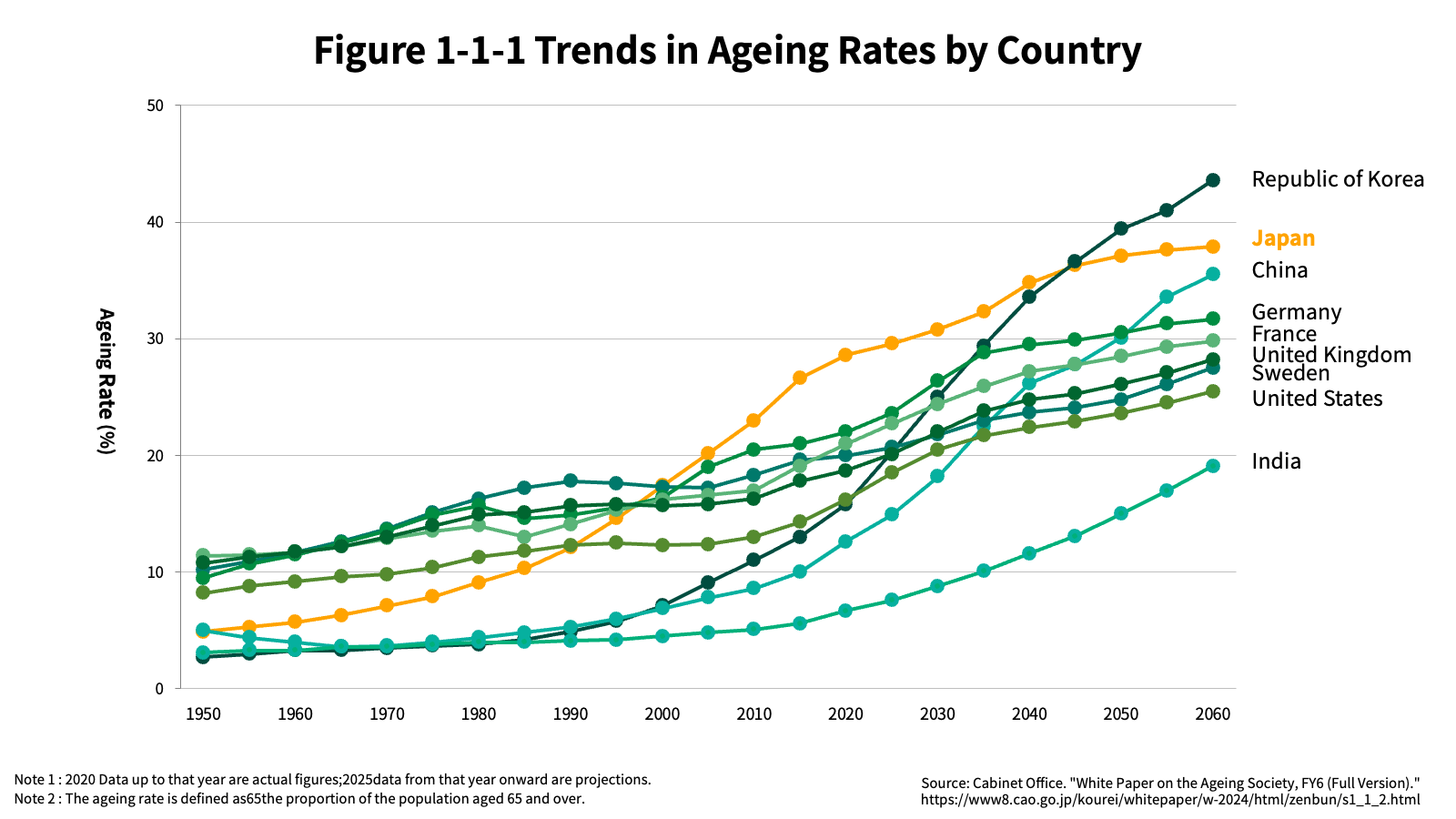
At the same time, Japan is experiencing a marked decline in the number of births. Annual births peaked at approximately 2.7 million in 1949, fell below 2 million in 1975, and have continued to decline gradually, thereafter with intermittent fluctuations. In 2016, the number of births fell below 1 million. Although the total fertility rate had shown an upward trend from 2006, it declined in 2014, rose again in 2015, and has since continued to fall. As of 2024, it stands at a historic low of 1.15, highlighting the severity of the demographic crisis.[8]
In recent years, the decline has further accelerated, and the period up to the 2030s, when the young population is projected to contract sharply, has been described as a critical turning point. If the downward trend is not reversed by 2030, Japan is expected to face irreversible population decline.[9]
Life Expectancy, Healthy Life Expectancy, and Disease Trends
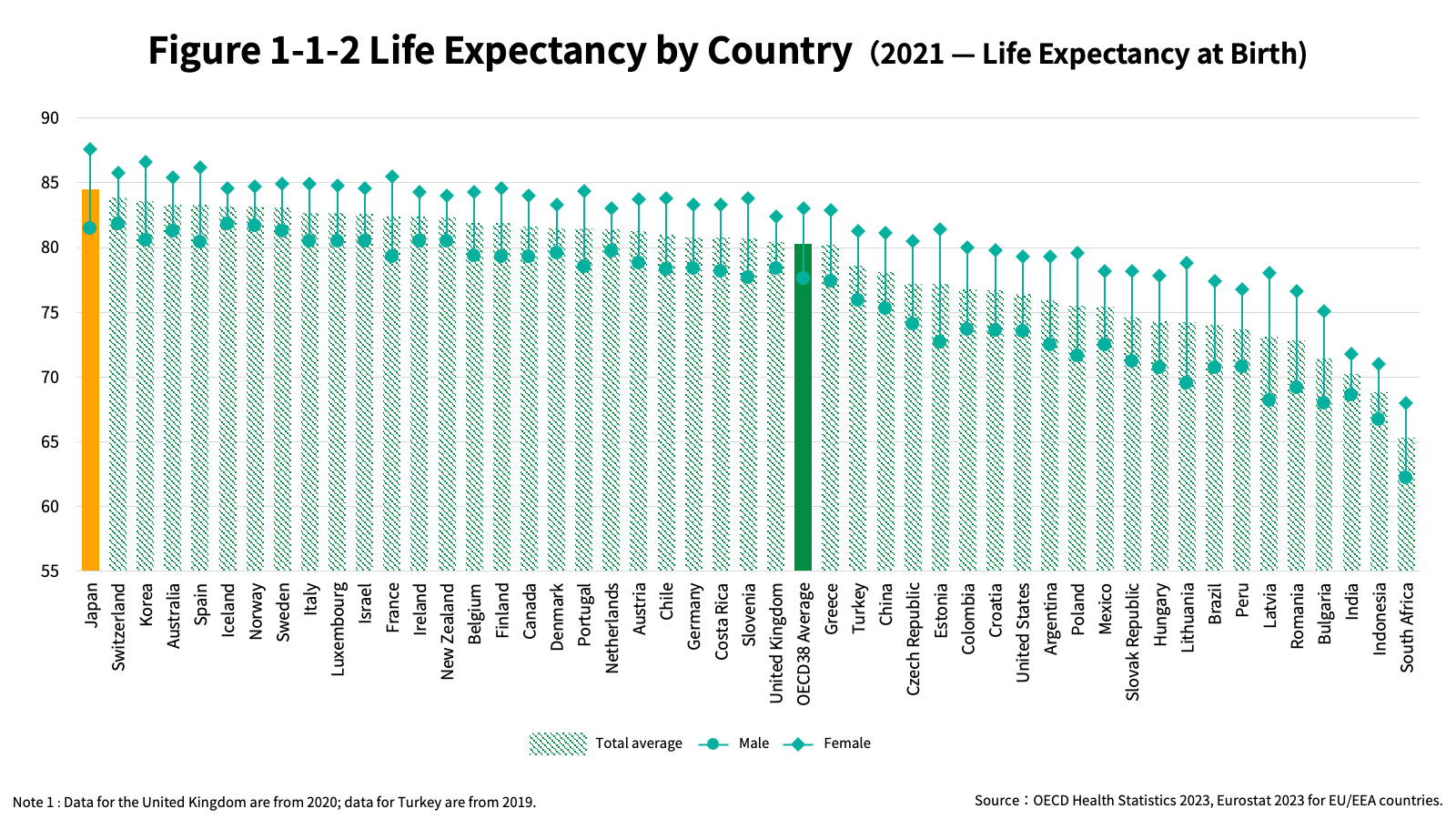
Japan’s life expectancy remains among the highest in the world, at 87.14 years for women and 81.09 years for men. Japan also has a notably high healthy life expectancy (defined as years lived without limitations on daily activities due to health problems), which as of 2022 stands at 72.57 years for men and 75.45 years for women.[10] As a result, Japan has a large population of older adults who remain in good health, with high levels of social participation and employment. A 2024 survey found that 35.6% of older adults were engaged in paid work.[11]
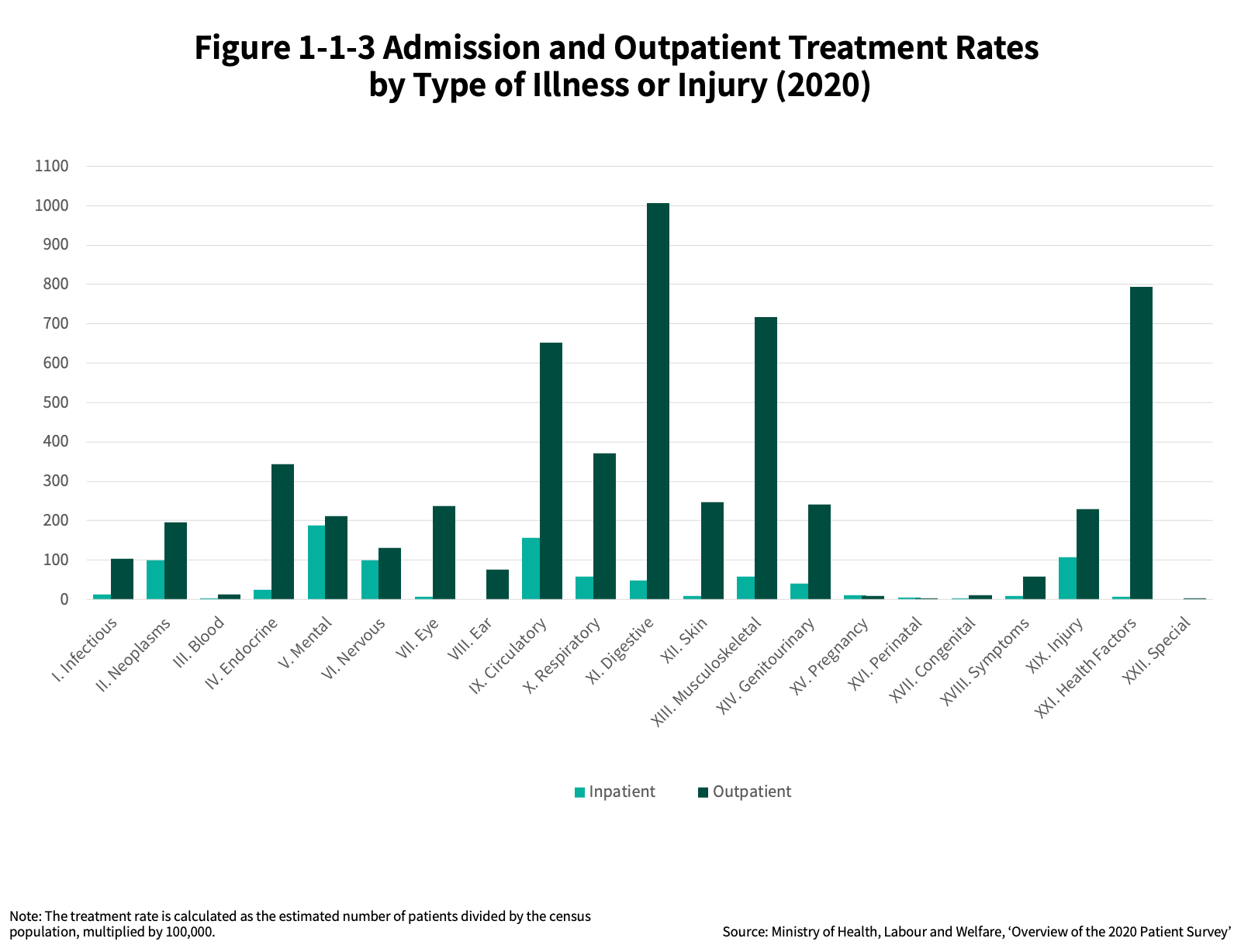
Next, we turn to the disease profile of the Japanese population. In Japan, a national Patient Survey is conducted every three years in order to capture the medical conditions and other health-related issues of all patients utilizing healthcare facilities. The graph below illustrates consultation rates by disease category.
For inpatient care, the most prevalent categories are mental and behavioral disorders and circulatory diseases. For outpatient care, the most frequent categories are diseases of the digestive system and factors influencing health status and contact with health services. These data highlight notable differences between inpatient and outpatient patterns of healthcare utilization.
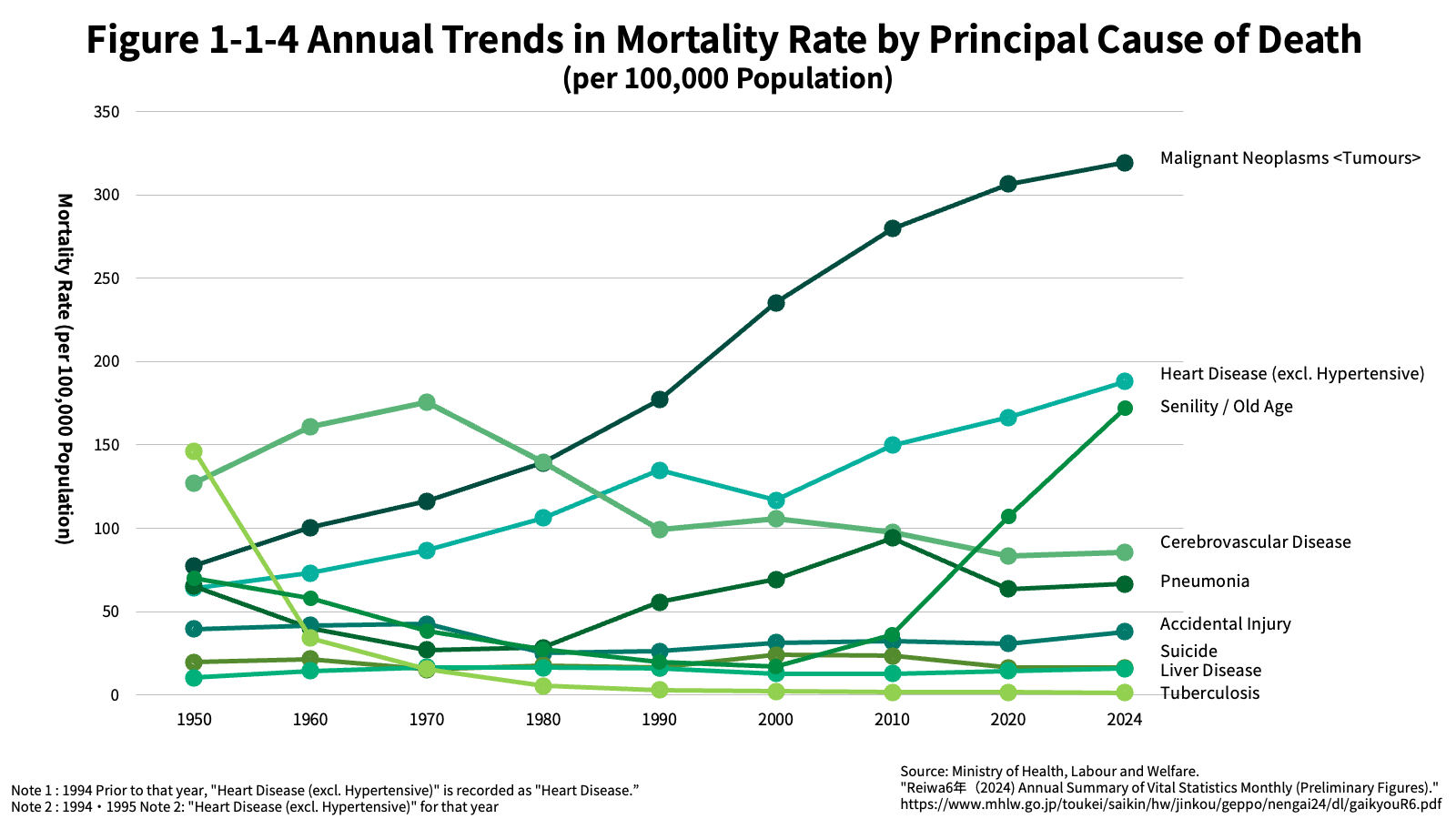
Furthermore, the distribution of mortality by major causes has changed significantly across generations. Following the post-war period, deaths attributable to tuberculosis declined markedly, resulting in a fundamental shift in Japan’s mortality structure from infectious diseases to the so-called non-communicable diseases (NCDs). Recent trends indicate that malignant neoplasms, heart disease, and senility constitute the three leading causes of death. In particular, with the rapid progression of population ageing in recent years, mortality from senility has been steadily increasing. While deaths due to cerebrovascular disease and pneumonia have shown a downward trend, mortality from suicide has remained persistently high compared with other countries.[12]
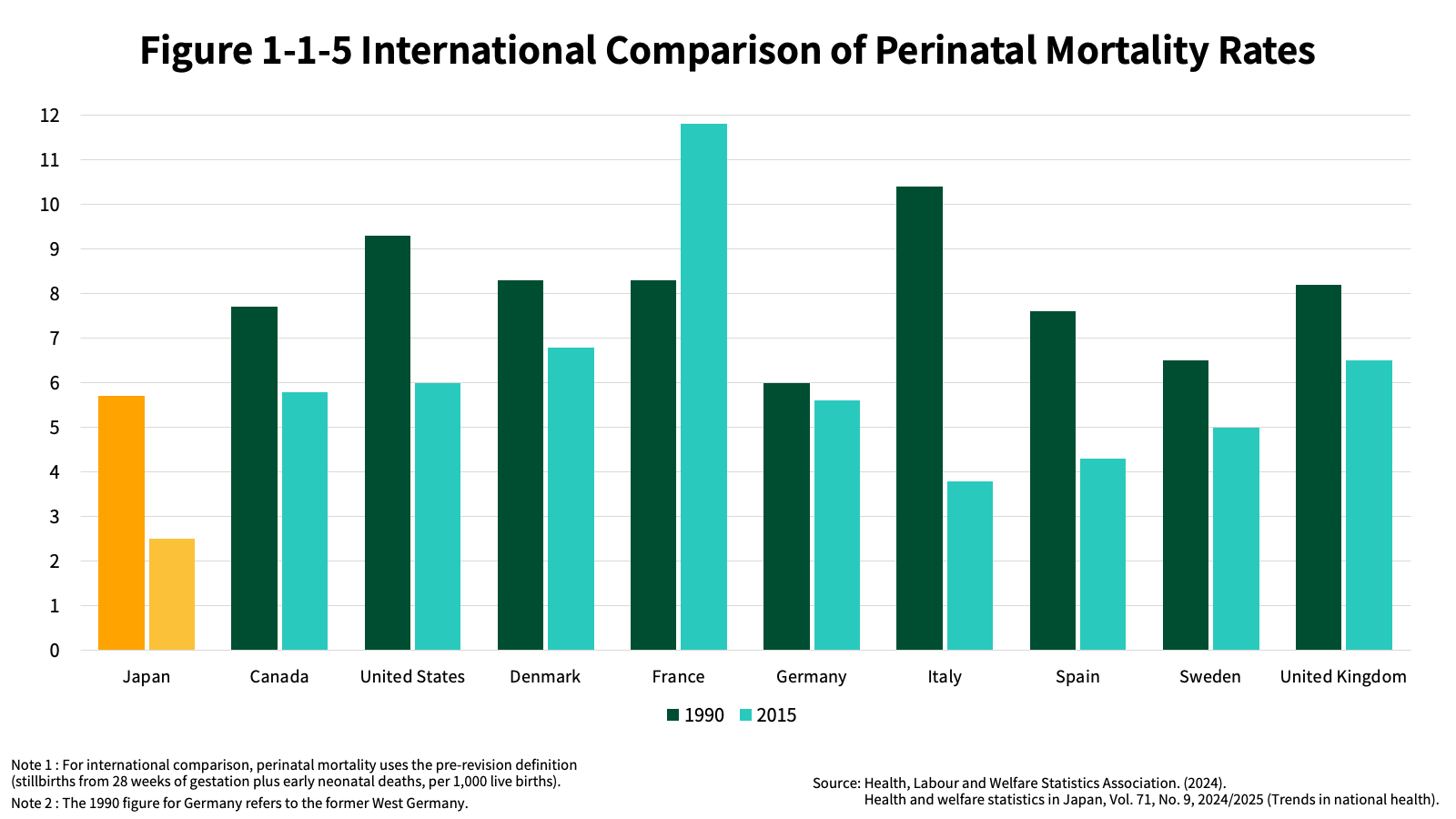
Regarding perinatal mortality, which comprises stillbirths occurring from 22 weeks of gestation onwards and early neonatal deaths within the first week of life, the situation in Japan has shown continuous improvement since the post-war period, and the current rate remains low compared with that of other countries.[13]
- [1] Statistics Bureau of Japan, Ministry of Internal Affairs and Communications. Population Estimates. https://www.stat.go.jp/data/jinsui/2024np/index.html
- [2] Cabinet Office. White Paper on the Ageing Society 2025 (FY2025 Edition, Full Version). https://www8.cao.go.jp/kourei/whitepaper/w-2025/zenbun/pdf/1s1s_01.pdf
- [3] Ministry of Health, Labour and Welfare. Overview of the 2024 (Reiwa 6) Vital Statistics Monthly Report: Annual Total (Preliminary Figures). https://www.mhlw.go.jp/toukei/saikin/hw/jinkou/geppo/nengai24/dl/gaikyouR6.pdf
- [4] Ministry of Internal Affairs and Communications. Older Persons in Japan: Statistical Overview. https://www.stat.go.jp/data/topics/pdf/topics146.pdf
- [5] Imai, H. (2016). “What Is the ‘2025 Problem’? Various Aspects of the Challenges Facing Public Health.” Journal of Health and Medical Sciences, Vol. 65, No. 1, pp. 2–8. https://www.niph.go.jp/journal/data/65-1/201665010002.pdf
- [6] Ministry of Internal Affairs and Communications. Older Persons in Japan: Statistical Overview. https://www.stat.go.jp/data/topics/pdf/topics146.pdf
- [7] Ministry of Health, Labour and Welfare. Summary of the Social Security and Work Style Reform Headquarters with a View to 2040. https://www.mhlw.go.jp/content/12601000/001471353.pdf
- [8] Ministry of Health, Labour and Welfare. Overview of the 2024 (Reiwa 6) Vital Statistics Monthly Report: Annual Total (Preliminary Figures). https://www.mhlw.go.jp/toukei/saikin/hw/jinkou/geppo/nengai24/dl/gaikyouR6.pdf
- [9] Children and Families Agency. Children’s Future Strategy. https://www.cfa.go.jp/assets/contents/node/basic_page/field_ref_resources/fb115de8-988b-40d4-8f67-b82321a39daf/b6cc7c9e/20231222_resources_kodomo-mirai_02.pdf
- [10] Cabinet Office. White Paper on the Ageing Society 2025 (FY2025 Edition, Full Version). https://www8.cao.go.jp/kourei/whitepaper/w-2025/zenbun/pdf/1s1s_01.pdf
- [11] Cabinet Office. White Paper on the Ageing Society 2025 (FY2025 Edition, Full Version). https://www8.cao.go.jp/kourei/whitepaper/w-2025/zenbun/pdf/1s3s_01.pdf
- [12] Health and Welfare Statistics Association. Trends in National Health, Vol. 71, No. 9, 2024/2025.
- [13] Health and Welfare Statistics Association. Trends in National Health, Vol. 71, No. 9, 2024/2025.
1.2 The Medical Insurance System
The Central Role of Public Health Insurance in Japanese Health Policy
The fundamental principles underpinning Japanese health policy are universal health insurance coverage and free access. In other words, all residents are enrolled in some form of public health insurance, and patients are free to choose medical institutions and the frequency of consultations. Both principles are sustained by the public health insurance system.
Since 1961, Japan has operated under a universal health insurance system, whereby all residents are required to be covered by a public medical insurance scheme. This feature distinguishes Japan’s health insurance system from those of many other countries. Consequently, within the healthcare system, the role of public health insurance is of exceptionally high importance.
Japan’s public health insurance system is broadly categorized into three schemes:
- Employee Health Insurance (Employment-based Insurance): Covers employees of companies and public-sector organizations under the age of 75 who are engaged in formal employment.
- National Health Insurance: Applies to individuals who are not covered by employee health insurance (including its dependents) and who are not enrolled in the Late-Stage Elderly Medical Care System, such as the self-employed and agricultural workers.
- Late-Stage Elderly Medical Care System: In principle, this scheme covers individuals aged 75 years and older.
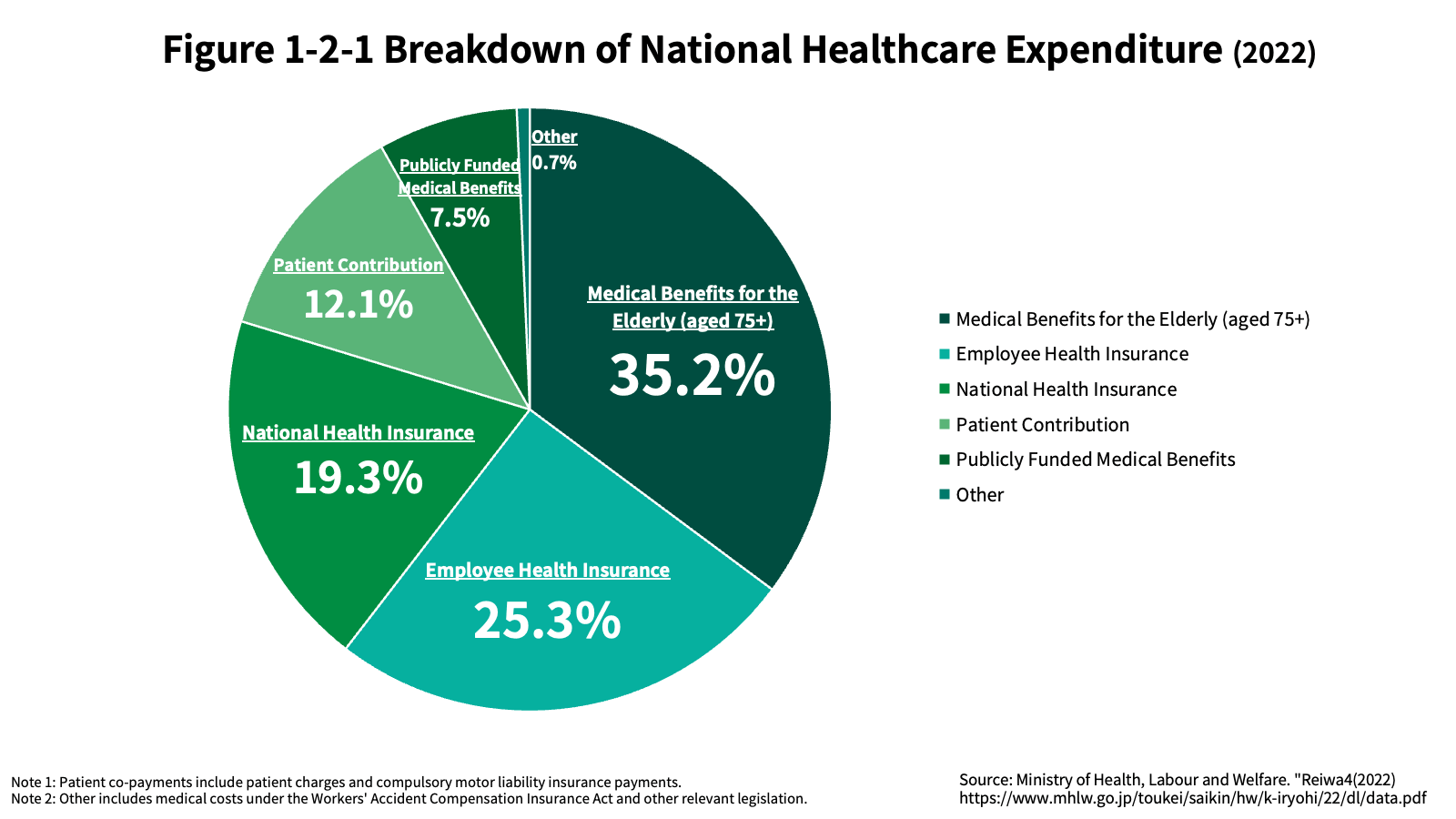
Japan’s national medical expenditure, an estimate of total treatment costs incurred at domestic medical institutions, is financed through a combination of public expenditure, health insurance benefits (employee health insurance, national health insurance, and the late-stage elderly medical care system), and out-of-pocket payments by patients. The breakdown is illustrated in the figure below.[14] Approximately 80% of national medical expenditure is covered by the health insurance system, thereby indicating its substantial role.
Furthermore, publicly funded medical benefits are administered through mechanisms that largely align with those of the health insurance system. As a result, although medical assistance provided under the public assistance program, accounting for roughly half of publicly funded medical benefits, represents a major exception to the principle of universal health insurance, public medical insurance schemes remain central to health policy considerations. Medical services not covered by the public insurance system, such as fully self-funded private medical care, currently account for only 1.2% of total national medical expenditure.
Another defining feature of Japan’s healthcare system, alongside universal coverage, is unrestricted access to care. This means that all individuals are free to consult healthcare providers of their choice. Although access is an element of the healthcare provision framework, this freedom is underpinned by the public health insurance system. Seeing as most domestic healthcare providers are registered as authorized providers under the public insurance schemes, patients are able to receive necessary services at a standard, regulated co-payment irrespective of which insurance scheme they are enrolled in.
Initiatives Beyond the Public Health-Insurance Framework
In addition to the structures described above, the Ministry of Health, Labour and Welfare pursues targeted measures for major disease categories and specific policy programs.[15] The following summarizes the principal areas of those efforts.
| Relevant Legislation, Policies, and Current Context | Priority Issues and Development of the Healthcare Delivery System | |
|---|---|---|
| Cancer |
|
|
| Cardiovascular diseases (stroke and heart disease) |
|
|
| Diabetes Mellitus |
|
|
| Psychiatric Disorders |
|
|
| Intractable (Rare) Diseases |
|
|
| Infectious Diseases |
|
|
| Kidney Diseases |
|
|
| Emergency Medical Care |
|
|
| Disaster Medicine |
|
|
| Healthcare in Remote and Underserved Areas |
|
|
| Perinatal Care |
|
|
| Paediatric Healthcare |
|
|
| Community Health and Medical Care |
|
|
| Home-Based Medical Care |
|
|
| Dental and Oral Health |
|
|
| Suicide Prevention |
|
|
| Medical Safety Management |
|
|
In 2013, with the objectives of achieving world-leading medical technologies and services, extending healthy life expectancy, and fostering pharmaceuticals and medical devices as strategic industries to underpin Japan’s economic revitalization, the Office for Healthcare and Medical Strategy was established within the Cabinet Secretariat. At the time, responsibilities in the health and medical field were dispersed across multiple ministries and agencies, creating a need for a central coordinating body with a command function under the Cabinet Secretariat. Subsequently, this body was renamed the Headquarters for Healthcare and Medical Strategy Promotion.
In 2014, the Act on Promotion of Healthcare and Medical Strategy was enacted, and in the same year the Healthcare and Medical Strategy was formulated pursuant to this legislation. The strategy set out two core pillars: (i) the provision of medical care utilizing technologies of the highest global standard, and (ii) contribution to economic growth. Since then, a wide range of cross-ministerial policies have been advanced beyond traditional administrative boundaries.
Another prominent example of a cross-sectoral, multi-ministerial approach is the Comprehensive Strategy for the Promotion of Dementia Policies (the “New Orange Plan”). This strategy was formulated in 2015 in response to the increasing number of people living with dementia alongside population ageing, with the aim of creating a society in which the wishes of people with dementia are respected and they are able to continue living in familiar communities in a manner consistent with their own values and preferences.[16] Distinct from previous dementia policies, the strategy attracted attention for its emphasis on the perspectives of people with dementia and their families, as well as for being jointly issued by twelve ministries and agencies, led by the Ministry of Health, Labour and Welfare, thereby incorporating a broad range of perspectives beyond welfare alone.[17]
From 2019 onwards, the Dementia Policy Promotion Outline was newly established, placing particular emphasis on the principles of “coexistence” and “prevention”. Concretely, initiatives have included the development of systems for early detection and early response to dementia, as well as the strengthening of community-based support frameworks in collaboration with local governments.[18] Building on these developments, the Basic Act on Dementia was enacted in 2023, under which the national government and local authorities are required to formulate plans and actively engage in the implementation of dementia-related policies.
- [14] Ministry of Health, Labour and Welfare. National Medical Expenditure by Insurance Scheme, FY2022.
- [15] Health and Welfare Statistics Association (2024). Trends in National Health 2024/2025: Supplement to Journal of Health and Welfare Statistics, pp. 10–12.
- [16] Ministry of Health, Labour and Welfare; Cabinet Secretariat; Cabinet Office; National Police Agency; Financial Services Agency; Consumer Affairs Agency; Ministry of Internal Affairs and Communications; Ministry of Justice; Ministry of Education, Culture, Sports, Science and Technology; Ministry of Agriculture, Forestry and Fisheries; Ministry of Economy, Trade and Industry; Ministry of Land, Infrastructure, Transport and Tourism. Comprehensive Strategy for the Promotion of Dementia Policies (New Orange Plan) (Overview). https://www.mhlw.go.jp/file/06-Seisakujouhou-12300000-Roukenkyoku/nop1-2_3.pdf
- [17] Japan Health Policy Now (JHPN). Outline for the Promotion of Dementia Policies (2019). https://japanhpn.org/ja/dementia1-3/
- [18] Ministry of Health, Labour and Welfare. Outline for the Promotion of Dementia Policies (Summary). https://www.mhlw.go.jp/content/000519053.pdf
1.3 History of Public Health Insurance
Understanding the historical development of the public health insurance system is essential for grasping the current structure of Japan’s healthcare system. Broadly speaking, Japan’s public health insurance consists of three distinct schemes: employment-based insurance (Employees’ Health Insurance), community-based insurance (National Health Insurance), and an age-based scheme (the Medical Care System for the Elderly Aged 75 and over). In addition, medical assistance under the Public Assistance system exists, which is administered in a manner analogous to public health insurance (see Section 1.2).
Together, these three public health insurance schemes and the Public Assistance system form the foundation of one of the world’s largest health insurance systems, currently covering virtually the entire Japanese population as well as long-term residents in Japan (amounting to more than 127 million people). The existence of multiple schemes and multiple insurers reflects the historical process of repeated institutional reforms that have taken place since the enactment of the Health Insurance Act in 1922.
The Emergence of Social Insurance: The Origins of Public Health Insurance
The wave of the Industrial Revolution that began in the United Kingdom in the late eighteenth and nineteenth centuries eventually reached Japan. In the latter half of the nineteenth century, Japan’s industrial revolution gained momentum when government-owned factories were transferred to private ownership. At that time, the textile industry formed the core of modern industry, leading to a large influx of women and child laborers from rural areas into urban centers. These workers were often forced to work under extremely poor conditions, and many were sent back to their home villages due to illnesses such as tuberculosis.
In response to these circumstances, social movements emerged and calls for labor protection legislation intensified. However, these efforts were repeatedly thwarted by strong opposition from employers. Eventually, in 1911, the Factory Act was enacted to protect factory workers, although its provisions reflected numerous compromises and its enforcement was postponed until 1916. Nevertheless, the Act stipulated employers’ responsibilities to provide assistance in cases of work-related injury or death, and may be regarded as the embryonic form of health insurance in Japan.
Establishment of the Health Insurance Act
The First World War, centered largely in Europe, led to rapid expansion of Japan’s heavy and chemical industries, resulting in a marked increase in the number of adult male industrial workers. However, the post-war period was characterized by economic recession, mass unemployment, and an intensification of labor movements influenced in part by the Russian Revolution. Under these conditions, the government and political parties were compelled to pay greater attention to the status of workers.
The government therefore sought to ease class conflict by tolerating more moderate labor movements while simultaneously repressing more radical ones. As part of this strategy, in 1922 the Health Insurance Act was enacted with the objective of protecting workers. This legislation constitutes the direct predecessor of today’s employment-based health insurance system.
At the time, however, the social security framework was still underdeveloped, with social insurance being established prior to the creation of a comprehensive public assistance system. Consequently, extensive coordination was required prior to implementation, particularly with regards to the system of healthcare provision. Medical associations, wary of the widespread provision of low-cost medical services, sought to assume responsibility for delivering care under the Health Insurance Act. As a result, negotiations between the government and medical associations, particularly over medical fee schedules, became routine.
Implementation of the system was further delayed by the Great Kantō Earthquake of 1923, and it was not until 1927 that the Health Insurance Act was finally enforced. Even then, the system faced unstable operation in its early years, as the economy struggled under the financial crisis of 1927 followed by the global Great Depression of 1929.
Experience of Fascism: The First Achievement of Universal Health Insurance
Japan’s economy is often said to have recovered relatively quickly from the Great Depression. Two major factors contributed to this recovery: the expansionary fiscal policies implemented by Korekiyo Takahashi, and economic stimulus driven by military demand, as exemplified by the 1931 Manchurian Incident. Combined with the rise of fascism, these developments heightened awareness of the need for health policies aimed at strengthening national capacity and promoting a healthy, militarily fit population. As a result, public health insurance schemes were further expanded. Following the Marco Polo Bridge Incident in 1937, which triggered full-scale war between Japan and China, this momentum accelerated significantly.
First, the administration of health insurance, which had previously been unstable, was placed on a more sustainable footing as a result of economic growth. The collapse in raw silk prices during the Depression led to the decline of the textile industry, which was replaced by heavy industry as the backbone of the economy in support of military production. This structural shift increased the proportion of adult male policyholders within the health insurance system and, in combination with favorable economic conditions, substantially improved the financial position of health insurance funds. Consequently, the Health Insurance Act was amended in 1934, expanding eligibility. Further legislative measures in 1939 extended coverage to seafarers, white-collar workers, and the families of workers.
It was during this period that community-based insurance schemes emerged. These were originally conceived as countermeasures to rural impoverishment, where economic recovery from the Depression had lagged. Layoffs of migrant workers and declining silk prices severely affected farm household incomes, while a sharp fall in rice prices following a bumper harvest in 1930, compounded by poor harvests the following year, further exacerbated rural economic hardship. The Social Affairs Bureau of the Ministry of Home Affairs began examining the establishment of an insurance system covering the general population outside the employed workforce as a means of improving health and nutritional conditions in rural areas. At the same time, rural poverty was increasingly perceived as a critical issue by the Army, which depended heavily on rural areas as sources of military manpower. This led to growing involvement by the military, and, bolstered by its political influence, the National Health Insurance Act was enacted in 1938. At that time, however, enrolment in National Health Insurance remained voluntary.
In 1941, the Insurance Bureau of the Ministry of Health and Welfare announced the Basic Outline for the Structure of Social Insurance, which set out a comprehensive vision for the future of Japan’s social insurance system. The outline proposed a dual structure comprising employment-based insurance and community-based insurance, the realization of universal coverage through compulsory enrolment, and the reduction of benefit disparities through enhanced coverage. To give effect to this vision, legislative reforms were enacted in 1942 to integrate employment-based insurance schemes and strengthen community-based insurance. As a result, decision-making authority over most aspects of healthcare provision—previously dominated by medical associations—was transferred to the government, and National Health Insurance was converted into a compulsory system. Subsequent government-led campaigns to promote universal enrolment led to the establishment of National Health Insurance associations in 95 per cent of municipalities by the end of fiscal year 1943, achieving what is referred to as the first instance of universal health insurance coverage in Japan.
However, this state-led insurance system was unable to function effectively due to worsening wartime fiscal constraints, shortages of physicians, and shortages of medical supplies. Nevertheless, the institutional foundations established during this period later became an essential basis for the post-war development of Japan’s public health insurance system.
Development of the Welfare State: Re-achievement of Universal Health Insurance and Expansion of Healthcare Coverage
Following the end of the Second World War in 1945, under the occupation policies of the General Headquarters (GHQ) of the Allied Powers, National Health Insurance was redefined not as a product of fascism but as a public social security system. In 1948, the National Health Insurance Act was amended to introduce a decentralized structure under which municipalities could establish National Health Insurance schemes through local ordinances on a voluntary basis. As a result, given the severe socio-economic devastation of the post-war period, only a limited number of municipalities were able to implement such ordinances, and by 1956 it was estimated that approximately one-third of Japan’s population remained without health insurance coverage.
In response to this situation, momentum grew to enroll all uninsured individuals into National Health Insurance. In 1958, the National Health Insurance Act was revised once again, reclassifying the system as a responsibility of the central government rather than a discretionary municipal function. This revision provided the legal basis for fiscal transfers from the central government to municipalities, enabling supported municipalities to expand and consolidate their National Health Insurance schemes. By 1961, National Health Insurance associations had been established in all municipalities, and Japan is widely regarded as having achieved universal health insurance coverage at that point[19,20,21].
Improved affordability significantly increased public demand for healthcare services. However, disparities in benefit levels persisted across different insurance schemes. For example, employed persons covered by employment-based insurance received full coverage of medical costs, whereas National Health Insurance beneficiaries were required to pay 50 per cent of costs out of pocket. In response to societal demands for equity, the healthcare insurance system was progressively expanded throughout the 1970s. Out-of-pocket payments for household heads and family members under National Health Insurance, as well as for dependents under employment-based insurance, were gradually reduced from 50 per cent to 30 per cent. In addition, the High-Cost Medical Expense Benefit System was introduced, under which insurance would reimburse costs exceeding a specified threshold.
Furthermore, a system was established whereby public funds covered out-of-pocket medical expenses for older adults. Initially developed by local governments, this approach was later adopted at the national level. A partial revision of the Elderly Welfare Act in 1972 led to the implementation of the Elderly Medical Care Benefit Scheme in January 1973, the year often referred to as the “first year of welfare.” Under this scheme, individuals aged 70 years and over were able to access medical care, free of charge.
This period was characterized by the expansion of benefits across all insurance schemes, supported by increasing fiscal transfers from the central government. Behind the scenes, however, serious financial deficits emerged, particularly within employment-based insurance schemes covering small and medium-sized enterprises. Proposals to redistribute financial resources from the more stable insurance schemes of large corporations were debated but ultimately not realized. Against the backdrop of rapid economic growth, these fiscal challenges were temporarily resolved through additional government subsidies.
Reorganization of the Welfare State: Institutional Fragmentation and Fiscal Integration
The oil shock of 1973 placed significant constraints on the expansion of welfare states across advanced economies. In Japan, growing concern over rising healthcare expenditure driven by increased use of medical services by older people led to heightened scrutiny of the fiscal sustainability of the public health insurance system. Policy orientation shifted from a gradual reduction of out-of-pocket payments towards zero, to an approach aimed at converging at a certain level of equitable cost-sharing. This policy shift was symbolized by the 1984 revision of the Health Insurance Act, which raised the previously zero co-payment for employed insured individuals to 10 per cent.
At the same time, while new schemes continued to be introduced, the overall system evolved in two contrasting directions: institutionally, multiple schemes became increasingly differentiated and layered, akin to grafting new arrangements onto existing ones; fiscally, however, these schemes became increasingly integrated through inter-scheme financial adjustments.
A pioneering initiative in this process was the enactment of the Health and Medical Services Act for the Aged in 1982. By 1980, expenditure on healthcare for older people had expanded to more than four times its pre-1973 level, raising serious concerns. In particular, the financial strain on National Health Insurance (NHI) became a key issue, as retired individuals transitioned from employment-based insurance to community-based insurance schemes. Although the creation of an age-independent scheme that would separate older people from NHI was considered, it was not realized. Instead, older individuals remained enrolled in their existing insurance schemes, while financial adjustments between insurers were implemented based on factors, such as the number of older beneficiaries. Concurrently, the introduction of modest co-payments for older people marked the end of the era of “free medical care for the elderly”[12].
In addition, to address structural problems arising from the transfer of retired employees into NHI, thereby placing further strain on its finances, the Retiree Medical Care Scheme was introduced in 1984. This scheme covered medical expenses for individuals and their families who had moved into NHI upon retirement, drawing primarily on contributions from the insurance premiums paid by working employees and employers. Its objectives were twofold: to mitigate the sudden increase in co-payment rates faced upon retirement, and to alleviate the financial burden borne by other NHI members.
The Health and Medical Services Act for the Aged and the Retiree Medical Care Scheme were subsequently reorganized through the elderly healthcare system reform implemented in 2006. At long last, an age-independent insurance scheme covering all individuals aged 75 and over was established. Upon reaching the eligible age, individuals were required to withdraw from their previous employment-based or community-based insurance schemes and enroll mandatorily in this new system. The financing structure of this scheme consists of approximately 50 per cent public funds (tax revenue), around 10 per cent contributions paid directly by older beneficiaries, and the remaining 40 per cent covered by financial transfers derived from insurance premiums paid by the working-age population.
For individuals aged 65 to 74 (the “young-old”), a system similar to the former Health and Medical Services Act for the Aged was established. Under this arrangement, individuals remain enrolled in either employment-based or community-based insurance schemes, while financial adjustment mechanisms operate between insurers.
As community-based insurance schemes saw their fiscal burden from retired older people reduced through these arrangements, employment-based insurance schemes, effectively the primary contributors to the redistribution mechanism, began to voice increasing concern. In response, National Health Insurance adopted a policy aimed at reducing regional disparities in medical expenditure. Furthermore, by incorporating prefectural governments into the financial management of NHI, greater fiscal stability of community-based insurance was pursued. Given that healthcare delivery systems, identified as a major cause of regional disparities, fell under prefectural jurisdiction, a cooperative framework was established in which municipalities and prefectures jointly engaged in the efficient management of community-based insurance. Improvement of the healthcare delivery system emerged as a new policy challenge, framed in terms of the problem of “social hospitalization”. This concept referred to the excessive use of hospitals for treatment purposes due to shortcomings in long-term care service procedures and user cost-sharing at the time, resulting in inefficient consumption of medical resources. To address this issue, the Long-Term Care Insurance Act was enacted in 1997. As a result, those elements of healthcare for older people that were more care-oriented were transferred from the medical insurance system to the long-term care insurance system. In effect, a portion of the financial burden previously borne by National Health Insurance was carved out and addressed through a separate institutional framework.
Unlike medical care, the utility of long-term care services increases with service volume; accordingly, benefit ceilings based on levels of care need were introduced within the long-term care insurance system. Municipalities were designated as insurers, and premiums were to be financed by individuals aged 65 and over (Category I insured persons) and by individuals aged 40 to 64 who were enrolled in medical insurance schemes (Category II insured persons).
Towards a New Welfare State: Medium- to Long-Term System Governance
In response to changes in demographic structure and socio-economic conditions, various systems have been developed in a fragmented manner; nonetheless, they have remained fiscally interconnected through the shared nexus of healthcare expenditure for older people. Although this approach has been carried forward to the present day, it is widely recognized as fundamentally provisional, and there is growing acknowledgement that the overall architecture of the health insurance system should ideally be addressed in an integrated and comprehensive manner.
Originally, the 1984 revision of the Health Insurance Act stipulated that the integration and unification of the health insurance system should be pursued to ensure “fairness in burden-sharing and equality in benefits”. However, conflicts of interest proved difficult to reconcile, and reforms proceeded only incrementally. From around 2005, concerns over the financial condition of the health insurance system intensified rapidly at the political level, fueling momentum for comprehensive healthcare system reform.
As a result, legislative amendments enacted in 2006 provided not only for the establishment of the previously mentioned elderly healthcare system, but also for the reorganization of long-term care hospital beds, the promotion of cost containment through prevention-oriented policies, and the restructuring and consolidation of insurers at the prefectural level. Although full integration of the health insurance system was not achieved, individual reform programs were systematically organized around overarching reform objectives that transcended individual schemes.
As the institutional framework grew increasingly comprehensive, questions emerged regarding how such a system could be sustained over time. Against the backdrop of sluggish economic growth, raising public contributions proved politically difficult, placing renewed focus on ensuring the fiscal sustainability of the healthcare system. Particularly, reflecting on criticism that healthcare cost reductions during the Koizumi administration had led to a so-called “collapse of healthcare”, the Liberal Democratic Party began engaging opposition parties in discussions on securing stable funding sources.[22] With the anticipated surge in social security expenditure associated with the “2025 problem” in mind (see Section 1-1), the National Council on Social Security was established in 2008, adopting a political approach that presented benefits and burdens as an integrated package to the public.
Subsequently, Japan experienced a major political transition from Liberal Democratic Party rule to a Democratic Party government. Although the Democratic Party initially sought to significantly expand social security provision, such ambitions were ultimately constrained by insufficient fiscal resources. Through these debates, the necessity of addressing social security benefits and burdens in an integrated manner gained broad acceptance, leading to continued cross-party discussions on comprehensive reform of social security and taxation. As a result, the Social Security System Reform Promotion Act was enacted in 2012 on the basis of bipartisan consensus, and the National Council for Social Security System Reform was established.[23]
Building on the recommendations of this council, the Act on the Promotion of Reforms to Establish a Sustainable Social Security System (the “Program Act”) was enacted in 2013. This legislation specified reform agendas, timelines, and legislative pathways across key policy areas, including measures to address declining birth rates, healthcare and long-term care, and pensions.[24] Since then, healthcare policy has progressed through the sequential consideration of legislation based on the framework outlined in the Program Act. A notable example is the enactment of the 2015 amendment to the National Health Insurance Act, which constituted a major reform with long-term implications for the structure of the health insurance system. By adding prefectural governments as insurers alongside municipalities, this reform significantly expanded prefectural authority and responsibility over both NHI financial management and healthcare delivery systems.
Since the establishment of the National Council on Social Security in 2008, the medium- to long-term governance framework has been maintained. This has included the creation of the Social Security System Reform Promotion Council in 2014, the Council on All-Generation Social Security in 2019, and the Council for the Construction of an All-Generation Social Security System in 2021. These bodies have articulated an overall vision for social security policy, employing a model whereby target years are set on the basis of social, economic, and demographic indicators, comprehensive discussions are held on the future configuration of the social security system, and healthcare policies are subsequently implemented in accordance with those conclusions.
- [19] Kitayama, T. (2011). Institutional Development of the Welfare State and Local Government: The Politics of National Health Insurance. Yuhikaku.
- [20] Saguchi, T. (1977). History of the Japanese Social Insurance System. Keiso Shobo.
- [21] Yoshihara, K. and Wada, M. (2008). History of the Japanese Medical Insurance System. Toyo Keizai Inc.
- [22] Tokyo Foundation. Consumption Tax Archive, No. 5: The Fukuda Administration (Latter Part). https://www.tkfd.or.jp/research/detail.php?id=3665
- [23] Seike, A. (2023). “Towards a Social Security System that Increases the Number of Supporters.” Policy Research Institute, Ministry of Finance. https://www.mof.go.jp/public_relations/finance/202304/202304o.pdf
- [24] Nakamura, S. (2021). “What Was the Integrated Reform of Social Security and Tax? — The Aspect of Enhancing and Stabilising Social Security.” Social Security Research, 2021, Vol. 5, No. 4, pp. 435–448. https://www.ipss.go.jp/syoushika/bunken/data/pdf/sh21030102.pdf
1.4 Key Policies
| Year | Policy | Description |
|---|---|---|
| 1922 | Enactment of the Health Insurance Act |
|
| 1938 | Enactment of the National Health Insurance Act |
|
| Establishment of the Ministry of Health and Welfare | ||
| 1939 | Enactment of the Employees’ Health Insurance Act |
|
| 1942 | Amendment of the Health Insurance Act |
|
| 1948 | Enactment of the Medical Care Act |
|
| 1958 | Amendment of the National Health Insurance Act |
|
| 1961 | Achievement of Universal Health Insurance Coverage |
|
| 1963 | Enactment of the Elderly Welfare Act |
|
| 1972 | Amendment of the Elderly Welfare Act |
|
| 1973 | Amendment of the Health Insurance Act |
|
| 1982 | Enactment of the Health and Medical Services Act for the Elderly |
|
| 1985 | First Revision of the Medical Care Act |
|
| 1990 | Revision of Eight Welfare-Related Acts |
|
| 1993 | Second Revision of the Medical Care Act |
|
| 1997 | Enactment of the Long-Term Care Insurance Act |
|
| Third Revision of the Medical Care Act |
|
|
| 2000 | Act Partially Amending the Health Insurance Act and Related Acts |
|
| Fourth Revision of the Medical Care Act |
|
|
| 2002 | Act Partially Amending the Health Insurance Act and Related Legislation |
|
| 2005 | Amendment to the Long-Term Care Insurance Act |
|
| 2006 | Medical System Reform |
|
| Act Partially Amending the Health Insurance Act and Related Legislation |
|
|
| Fifth Revision of the Medical Care Act |
|
|
| 2008 | Act Partially Amending the Long-Term Care Insurance Act and the Elderly Welfare Act |
|
| Cabinet Order Partially Amending the Enforcement Order of the Health Insurance Act and Related Orders |
|
|
| Compilation of the Report of the National Council on Social Security |
|
|
| 2009 | Cabinet Order Partially Amending the Enforcement Order of the Health Insurance Act and Related Orders |
|
| 2011 | Act to Partially Amend the Long-Term Care Insurance Act, etc., to Strengthen the Foundations of Long-Term Care Services |
|
| 2012 | Amendment to the National Health Insurance Act |
|
| 2013 | Act to Partially Amend the Health Insurance Act, etc. |
|
| 2013 | Establishment of the Social Security Reform Program |
|
| 2014 | Act on the Development of Related Laws to Promote the Comprehensive Securing of Medical and Long-Term Care Services in the Community |
|
| Cabinet Order to Partially Amend the Enforcement Order of the Health Insurance Act, etc. |
|
|
| Sixth Revision of the Medical Care Act |
|
|
| Enactment of the Act on the Comprehensive Securing of Medical and Long-Term Care Services |
|
|
| 2015 | Enactment of the Act Partially Amending the National Health Insurance Act and Related Acts to Establish a Sustainable Medical Insurance System |
|
| Seventh Revision of the Medical Care Act |
|
|
| 2017 | Eighth Revision of the Medical Care Act |
|
| Cabinet Order Partially Amending the Enforcement Order of the Health Insurance Act and Related Orders |
|
|
| Act Partially Amending the Long-Term Care Insurance Act and Related Acts to Strengthen the Community-Based Integrated Care System |
|
|
| 2018 | Prefectural-Level Integration of the National Health Insurance System |
|