

2.1 Overview of Japan’s Governance Structure
Japan’s system of governance operates under the Constitution of Japan, which came into force in 1947, and adopts a parliamentary cabinet system. Unlike a presidential system, in which legislative and executive powers are strictly separated, the parliamentary cabinet system is institutionally designed to generate stable political initiative through the fusion of executive authority with the legislature. However, it has often been noted that Japan’s actual political practice has taken on characteristics that differ from the leadership model originally envisaged under this system. Rather than the Prime Minister exercising strong top-down leadership to implement bold policy changes, Japanese politics has traditionally been characterized by a governance style in which information is continuously gathered from extensive administrative networks that penetrate all levels of society, and policy coordination is incrementally advanced through bottom-up processes.
Following political reforms from the 1990s onwards, institutional arrangements were put in place to realize a more orthodox form of parliamentary cabinet government, in which legislation and administration are integrated in the conduct of governance. As a result, some Prime Ministers have emerged who were able to demonstrate strong leadership by skillfully utilizing the political institutions and environments created by these reforms. The judiciary, meanwhile, generally refrains from intervening in legislative and executive affairs and is typically accorded a relatively high degree of discretion. Conversely, court rulings, though issued infrequently, tend to be respected by both the legislature and the executive. The following sections examine Japan’s governance structure in greater detail.
The Japanese Policy-Making Process[1]
A defining feature of the parliamentary cabinet system is that the cabinet, which exercises executive authority, is formed on the basis of the confidence of the legislature. In Japan, the Prime Minister is elected by members of the National Diet, who themselves are chosen by the electorate. The Prime Minister then appoints ministers to exercise executive power, creating an interlinked relationship between the Diet and the Cabinet. Consequently, government policies are generally expected to pass through the Diet, and compared with a presidential system, in which legislators and the president are elected separately, authority is institutionally more concentrated in the Prime Minister.
In practice, however, the Cabinet has not frequently exercised its authority in a top-down manner to implement policy. One reason is that the bureaucracy, which ministers were expected to command to actualize policy objectives, in fact possessed such advanced policy-formulation capacity that it was often able to exert influence over ministers themselves. Another reason lies in the long-standing dominance of the Liberal Democratic Party (LDP), that for many years held a majority in the Diet while encompassing diverse political interests. The LDP developed robust internal policy-making and decision-making mechanisms, through which policies were scrutinized and consensus was formed within the party prior to Diet deliberation. By establishing party-wide agreement in advance and ensuring unified support during parliamentary debate, the LDP effectively monopolized the substantive policy-deliberation process. As a result, the ruling party, while ostensibly integrated with the government, came to function as an entity distinct from the Cabinet, retaining a de facto veto over government policy.
Under these conditions, policy formulation typically proceeded as follows. When a new policy was required, the relevant divisions within the responsible ministry would first undertake information gathering and solicit opinions. A draft proposal would then be prepared through extensive coordination involving advisory councils composed of industry representatives and academic experts, consultations with other ministries, and discussions with relevant politicians. Once a draft was completed, ministerial officials would visit the ruling party to provide explanations and engage in discussions with ruling-party legislators. These legislators, for their part, would participate actively, drawing on accumulated expertise in their respective policy areas. After passing internal party deliberation and being approved as the final consensus of the ruling party, the bill would be submitted to the Cabinet for formal approval at a cabinet meeting, before being introduced to the Diet. In Japan, once prior screening by the ruling party has been completed, party discipline (so-called party binding) typically determines voting behavior, meaning that substantive amendments to government-sponsored bills are rarely made during Diet deliberations.
In this way, post-war Japanese policymaking was characterized by a process in which the bureaucracy and ruling-party legislators absorbed information from the grassroots through surveys, hearings, and petitions, and then coordinated centrally to formulate policies. While this approach was ill-suited to bold policy shifts or cross-sectoral strategic decisions, it was regarded as highly effective in delivering finely calibrated responses within specific policy domains. Particularly during periods of economic growth, when government resources were relatively abundant, close cooperation between the public and private sectors enabled policies aimed at protecting, nurturing, and regulating industries.
Westminster-Style Reforms[2]
From the 1980s onwards, as economic growth slowed and political corruption scandals came to light, the need for political reform gained widespread recognition. From the 1990s through the early 2000s, a series of reforms were implemented, including electoral reform introducing single-member districts for House of Representatives elections, the strengthening of cabinet functions, and the reorganization of central government ministries. These reforms sought to approximate a more orthodox parliamentary cabinet system, in which voters choose political parties and governments in general elections, and the Prime Minister exercises leadership in governing the Cabinet.
These political reforms also altered the policymaking process. On major policy issues, deliberation began to take place within the Council on Economic and Fiscal Policy, an advisory body to the Prime Minister established in 2001, enabling agenda-setting that was not dependent on prior bureaucratic coordination. Institutional mechanisms were also created to allow reform initiatives to be proposed and coordinated directly under the Prime Minister’s leadership. In some cases, responsibility for key government policies was transferred from individual ministries to central coordinating bodies such as the Cabinet Secretariat.
Nevertheless, the extent to which concentrated authority within the Cabinet can be effectively exercised depends heavily on political circumstances and the governing philosophy of the Prime Minister. While reforms have undoubtedly strengthened cabinet functions and, under certain conditions, enabled top-down policy formulation by the Prime Minister and Cabinet, the traditional Japanese policy-making process has by no means disappeared and continues to coexist with these newer arrangements.
The Role of the Judiciary
In Japan, the judiciary does not routinely exert influence over healthcare policy. Ordinarily, it shows deference to the judgments of the legislative and executive branches and tends to grant them a relatively wide margin of discretion. Conversely, when court rulings are issued, albeit infrequently, they are widely regarded as carrying strong binding force over legislative and administrative actions.
The following section provides an overview of major cases in which judicial decisions have influenced healthcare policy.[3]
| Case Overview | Judicial Rulings and Legislative / Administrative Responses | |
|---|---|---|
| Thalidomide Litigation (c. 1960 onwards) | Children were born with severe disabilities, known as thalidomide embryopathy, to mothers who had taken thalidomide (a sedative–hypnotic drug, among other uses) during early pregnancy |
|
| SMON (Subacute Myelo-Optico-Neuropathy) Litigation (c. 1970 onwards) | Patients developed SMON after taking clioquinol-containing drugs used as intestinal medicines |
|
| HIV Litigation (c. 1980 onwards) | Patients with hemophilia and others were infected with HIV after receiving non-heat-treated blood coagulation factor products manufactured from blood collected in the United States and contaminated with HIV. |
|
| Creutzfeldt–Jakob Disease (CJD) Litigation (c. 1996–2005) | Patients developed CJD after receiving transplants of human dura mater contaminated with CJD pathogens during neurosurgical procedures. The dura mater had been imported from Germany. | |
| Refusal to Designate Medical Institutions for Health Insurance Coverage (2005) | A hospital was established despite a recommendation to suspend its opening due to an excess number of hospital beds under the Medical Care Act and regional medical care plans.[7] |
|
| Prohibition of Mixed Medical Treatment (2011)[8] | Medical practice was governed by an interpretation that combining insured medical treatment with uninsured medical treatment (“mixed treatment”) was not eligible for insurance coverage. |
|
| Hepatitis C Drug-Induced Injury Litigation (2002 onwards) | Patients were infected with the hepatitis C virus after receiving specified fibrinogen products or specified blood coagulation factor IX products during childbirth or surgery involving massive bleeding. |
|
| Hansen’s Disease Litigation / Hansen’s Disease Family Litigation (from 1998 onwards) | Former Hansen’s disease patients were subjected to continued forced isolation in sanatoria under the Leprosy Prevention Act. |
|
- [1] Iio, Jun (2007). Japan’s Governance Structure: From Bureaucratic Cabinet Government to Parliamentary Cabinet Government. Chūō Kōron Shinsho.
- [2] Iio, Jun (2007). Japan’s Governance Structure: From Bureaucratic Cabinet Government to Parliamentary Cabinet Government. Chūō Kōron Shinsho.
- [3] Unless otherwise indicated by specific footnotes, the table below is based on the Ministry of Health, Labour and Welfare (MHLW), Cases of Litigation Related to Adverse Drug Reactions (Cases Concluded by Settlement), available at: https://www.mhlw.go.jp/shingi/2008/06/dl/s0605-4a_0004.pdf
- [4] A system for reporting adverse drug reactions from companies to the Ministry of Health, Labour and Welfare was introduced through administrative guidance.
- [5] For details of the approval and licensing standards currently required for the use of pharmaceuticals, see Section 5.
- [6] “Specified biological products” refer to products manufactured using materials derived from humans or other living organisms (excluding plants) for which post-marketing safety measures are required to prevent the occurrence or expansion of public health hazards. Blood products constitute a representative example.
- [7] Kasagi, Eri et al. (2018). Social Security Law. Yūhikaku.
- [8] Kasagi, Eri et al. (2018). Social Security Law. Yūhikaku.
- [9] Ministry of Health, Labour and Welfare, Claims for Benefits under the Special Measures Act for Hepatitis C, available at: https://www.mhlw.go.jp/content/10901000/001055203.pdf
- [10] To receive benefits, it is necessary to file a lawsuit against the national government and obtain judicial confirmation of eligibility through legal proceedings. In addition, a claim must be submitted to the Pharmaceuticals and Medical Devices Agency (PMDA), together with supporting documentation such as court judgments or settlement agreements.
- [11] Ministry of Health, Labour and Welfare, Basic Act on Hepatitis Measures, available at: https://www.mhlw.go.jp/wp/hakusyo/kousei/10-2/kousei-data/PDF/22010219.pdf
2.2 The Health Policy Decision-Making Process
Health policy is, unsurprisingly, influenced by changes in Japan’s system of governance. This section explains how the process for revising the medical fee schedule has evolved alongside transformations in Japan’s governance structure.
Although Japan’s healthcare system is largely defined by the public health insurance scheme (see Section 1.2), the core mechanism underpinning this system is the medical fee schedule (shinryō hōshū). The medical fee schedule refers to the remuneration received in return for medical services provided. It establishes nationally uniform fees for services delivered by medical institutions and pharmacies. As a result, regulation of the medical fee schedule enables policymakers to steer the behavior of the vast majority of hospitals, clinics, and pharmacies across the country.
Conversely, because the medical fee schedule has a direct and substantial impact on the financial conditions of the healthcare sector as a whole, it has long been a focal point of political contention. Medical fee policy therefore involves a wide range of stakeholders and proceeds through multiple stages before decisions are finalized. In order to accommodate ongoing advances in medical technology while managing the complex and often conflicting interests of stakeholders, a structured and predictable policy-making process is required. In recent years, revisions to the medical fee schedule have, in principle, been conducted once every two years, following a clearly defined timetable.
A broadly similar process exists within the long-term care insurance system; however, this is not discussed here.
The Traditional Process of Medical Fee Revisions[12][13][14]
In the post-war period, the Central Social Insurance Medical Council (Chūō Shakai Hoken Iryō Kyōgikai, hereafter Chuikyo) held extensive authority over medical fee revisions. Chuikyo is an advisory council established within the Ministry of Health, Labour and Welfare and is composed of three groups: representatives of payers (such as insurers), representatives of providers (such as medical associations), and public interest members (including academics).
Notably, despite formally being an advisory body to the Minister of Health, Labour and Welfare, Chuikyo deliberated on and submitted recommendations regarding the rate of revision of the medical fee schedule. This revision rate represents an estimate of the overall increase (or decrease) in national healthcare expenditure resulting from the revision and has a significant influence on the government’s overall budget formulation. In effect, decisions that should ordinarily fall under the remit of the Cabinet or the Ministry of Finance were being determined by a council attached to a single ministry.
While Chuikyo as an institution wielded considerable authority, reaching consensus within the council was often extremely difficult. In broad terms, payer representatives, who prioritized the containment of healthcare expenditure, frequently clashed with provider representatives, who tended to favor increased spending. It has been suggested that both sides seek political resolutions by mobilizing members of the Diet or affiliated organizations at times. Among these actors, the Japan Medical Association was widely regarded as possessing particularly strong political influence.
Even after agreement was reached at the macro level on the overall revision rate, detailed decisions still had to be made at the micro level regarding how remuneration would be allocated across individual medical services. At this stage, conflicts sometimes arose even within the provider group itself, as negotiations effectively became competitions for limited resources between clinics and hospitals, or among different medical specialties. The Japan Medical Association was often perceived as being more inclined to protect the interests of clinic owners.
For many years, these deliberations were conducted behind closed doors, resulting in a policymaking process characterized by opacity and closed political bargaining. As governance reforms from the 1990s onwards strengthened the concentration of authority within the Cabinet (see Section 2.1), criticism intensified, particularly following bribery scandals involving Chuikyo, regarding the council’s assumption of functions that should properly belong to the executive. These developments culminated in the reform of Chuikyo in 2005, marking a major turning point in the medical fee revision process.
The Reformed Medical Fee Revision Process
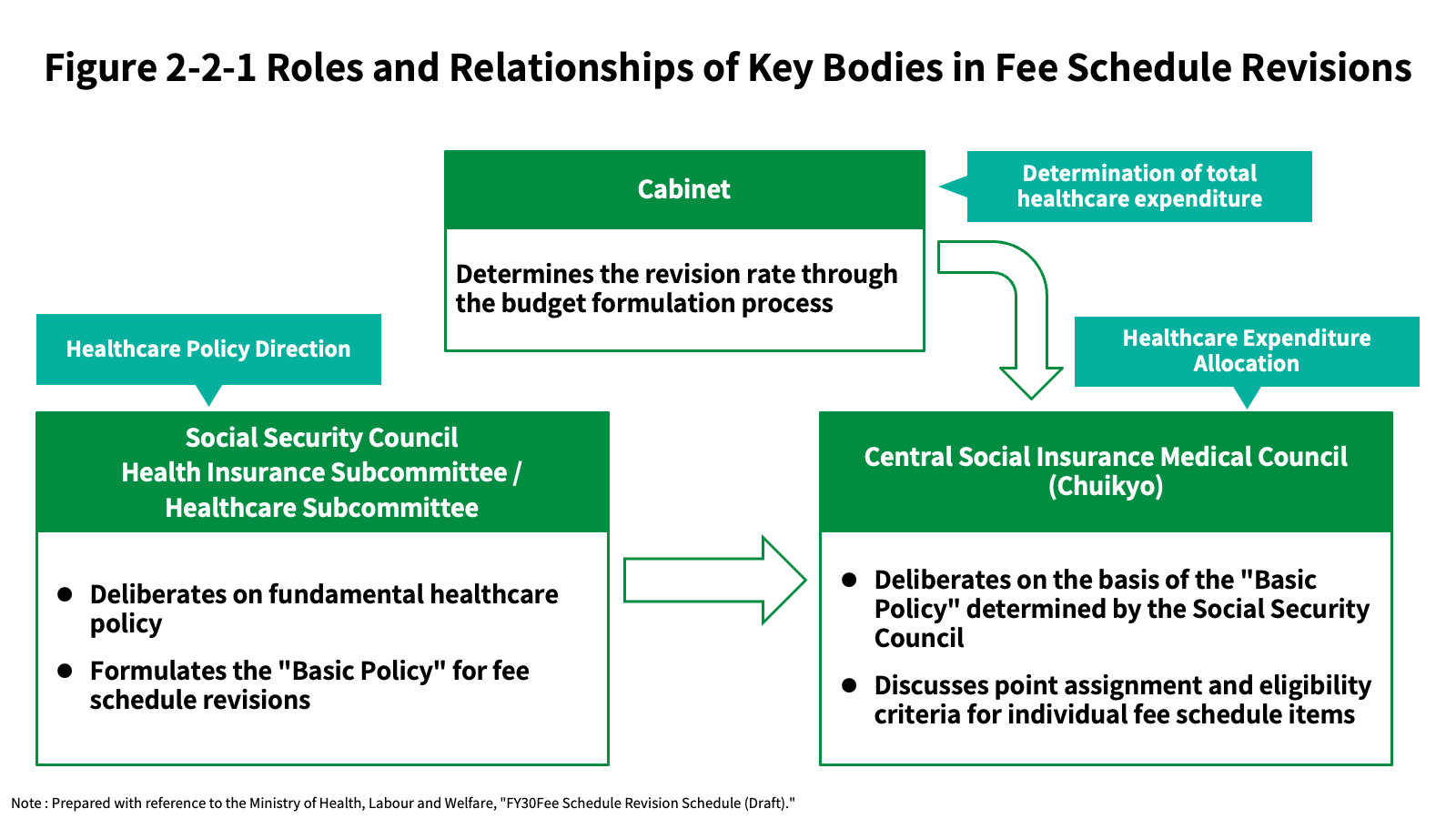
Following the 2005 reforms, functions that had previously been concentrated within Chuikyo were redistributed among other institutions, and Chuikyo’s role was more clearly defined.[15] The revised process operates as follows.
First, within the Cabinet, the overall budgetary framework is established, including the total amount that can be allocated to healthcare expenditure and the overall revision rate for the medical fee schedule. Next, the Social Security Council formulates the “Basic Policy for Medical Fee Revisions” from the perspectives of healthcare delivery and the health insurance system. Subsequently, Chuikyo undertakes detailed revisions of individual fee items and point values in line with this basic policy and compiles the draft medical fee revision.
Although these are formally three distinct stages, the Health Insurance Bureau of the Ministry of Health, Labour and Welfare is involved throughout, ensuring consistency and coherence across the entire process and enabling an integrated approach to medical fee revision.[16]
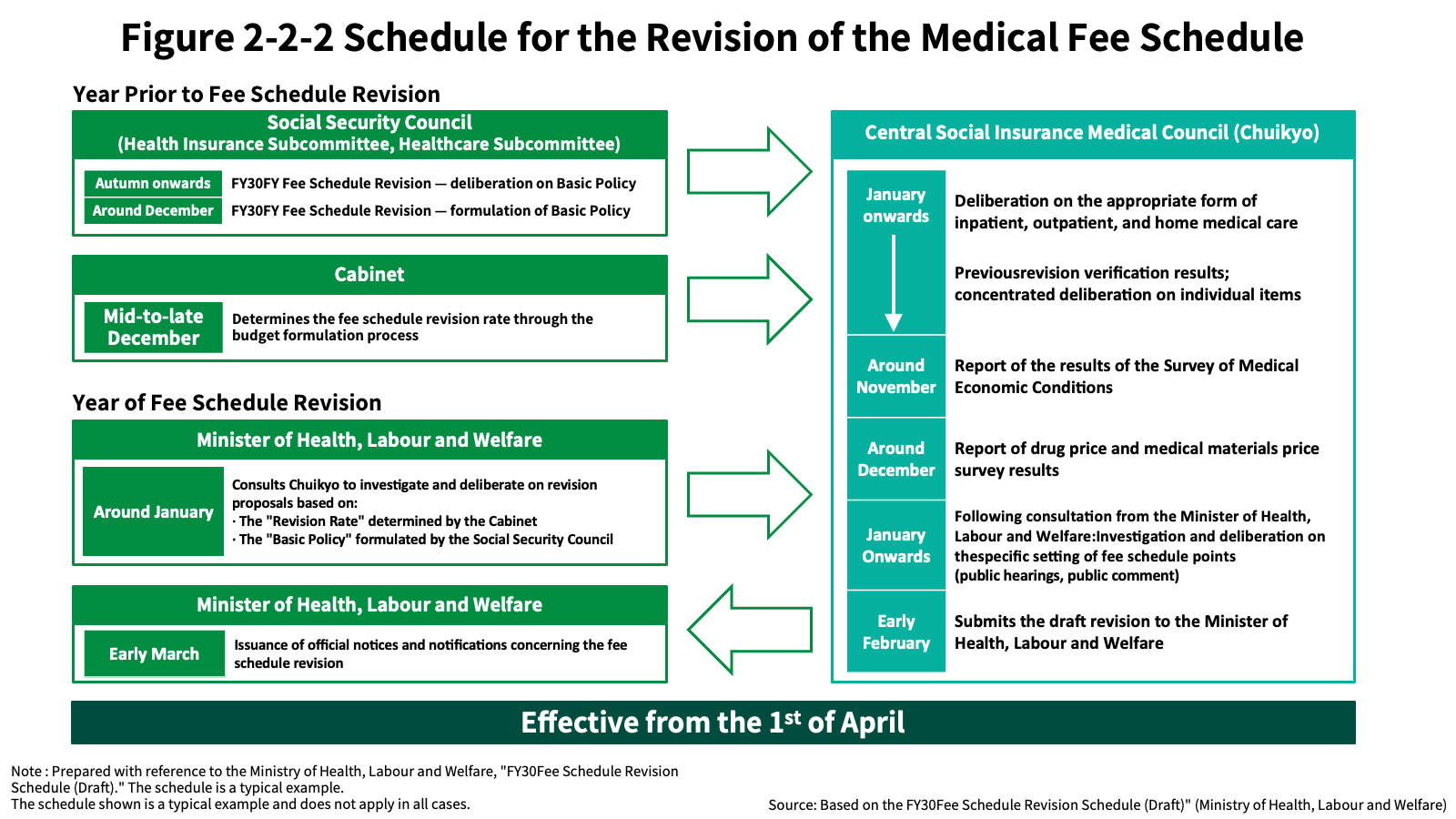
While the logical structure of the process is as described above, the actual two-year deliberation cycle involves some overlap in timing. For example, formulation of the “Basic Policy” by the Social Security Council may precede the Cabinet’s final decision on the revision rate. Within Chuikyo, deliberations typically proceed with an awareness of discussions at the Social Security Council, and it is common for each agenda item to be examined twice over the two-year review period.
The Organizational Structure of Chuikyo
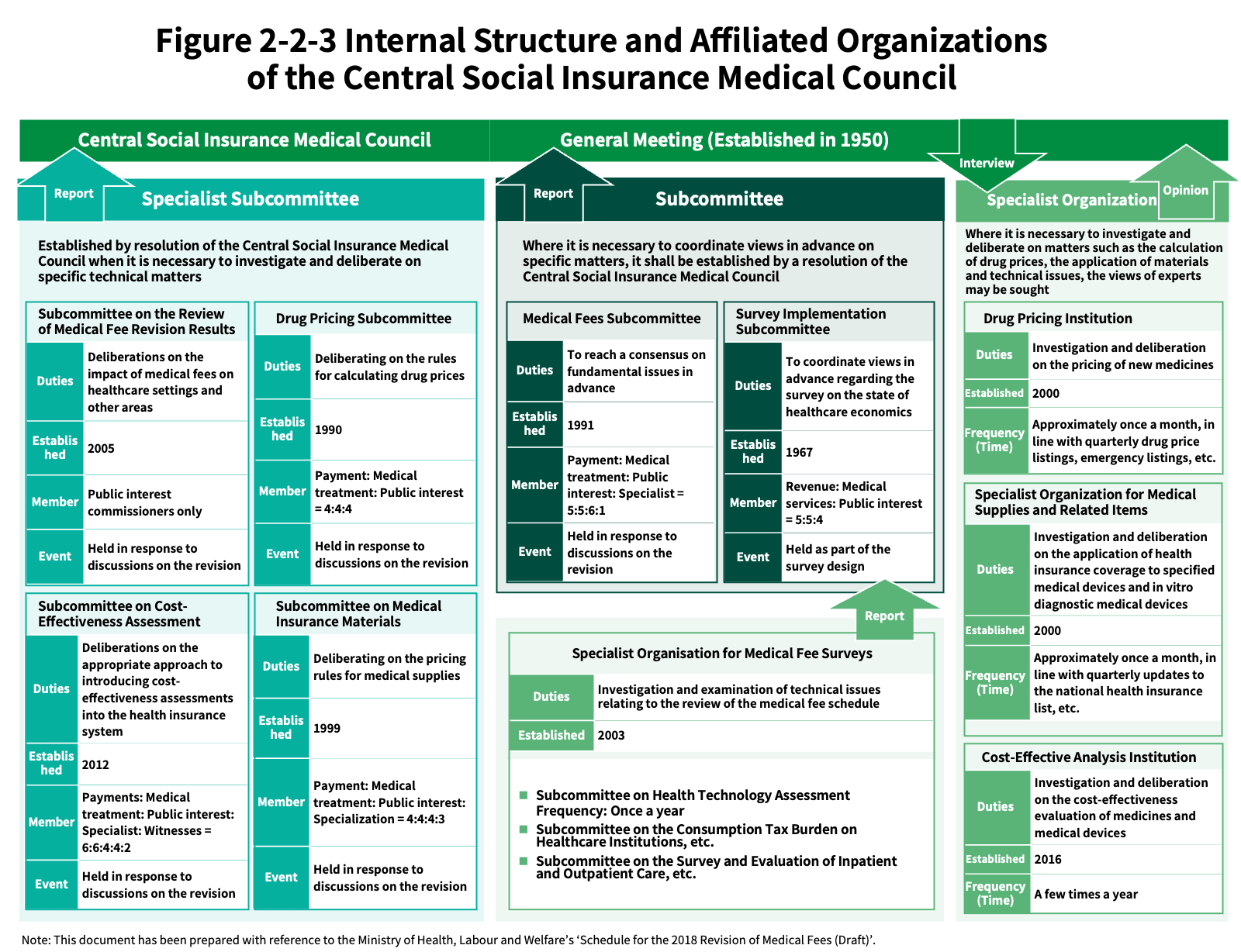
As a result of the above reforms, Chuikyo’s organizational structure also underwent significant changes. Although attention tends to focus on the General Assembly, which holds final decision-making authority, most substantive deliberation takes place in subcommittees and specialized bodies whose work feeds into decisions made by the General Assembly. These related bodies can be broadly classified into four categories.
The first category consists of four specialized committees. These are established by resolution of the General Assembly to examine technical matters, are composed of General Assembly members, and are chaired by a public interest member. The four committees are the Fee Revision Outcome Verification Committee, the Drug Pricing Committee, the Cost-Effectiveness Evaluation Committee, and the Medical Materials Committee.
The second category comprises two subcommittees. These are established when prior coordination of views is required on specific issues. They are composed of General Assembly members and chaired by a public interest member. The Medical Fee Fundamental Issues Subcommittee coordinates views between payers and providers based on input from the Technical Expert Organizations for Medical Fee Surveys described below. The Survey Implementation Subcommittee determines survey items for the Medical Economic Survey and coordinates opinions on the survey results.
The third category consists of the Technical Expert Organizations for Medical Fee Surveys. These bodies are established to investigate and examine technical issues related to revisions of the medical fee structure and are composed of healthcare professionals. Divided into several working groups, they deliberate on draft proposals from a technical perspective and report their findings to the Medical Fee Fundamental Issues Subcommittee.
The fourth category comprises three expert organizations that function as advisory bodies when specialist input is required on drug pricing, medical materials, and technical evaluation issues. These bodies include healthcare professionals and other experts and are divided into the Drug Pricing Organization, the Medical Materials Expert Organization, and the Cost-Effectiveness Evaluation Expert Organization. Based on rules approved by the General Assembly, these bodies determine concrete pricing and conduct cost-effectiveness evaluations of individual products.[17]
- [12] Tanabe, Kuniaki (2021). “The Structure and Process of Decision-Making within the Central Social Insurance Medical Council.” Health Economics Research, Vol. 33, No. 1. https://www.ihep.jp/wp-content/uploads/2021/10/Vol.33_No.1_2021_2-0.pdf
- [13] Ministry of Health, Labour and Welfare, Summary of the Report of the Expert Panel on the Future of the Central Social Insurance Medical Council, available at: https://www.mhlw.go.jp/shingi/2005/07/dl/s0720-7a1.pdf
- [14] Ministry of Health, Labour and Welfare, Towards a New Start for the Central Social Insurance Medical Council, available at: https://www.mhlw.go.jp/shingi/2005/07/dl/s0720-7b1.pdf
- [15] Sakai, Masami (2016). “The Structure and Revision of Medical Service Fees.” Journal of the Japanese Society of Internal Medicine, Vol. 105, No. 12. https://www.jstage.jst.go.jp/article/naika/105/12/105_2320/_pdf
- [16] Tanabe, Kuniaki (2021). “The Structure and Process of Decision-Making in the Central Social Insurance Medical Council,” Health Economics Research, Vol. 33, No. 1. https://www.ihep.jp/wp-content/uploads/2021/10/Vol.33_No.1_2021_2-0.pdf
- [17] Endō, Hisao (2014). “The Process of Determining Medical Service Fees.” Journal of the Japanese Society of Internal Medicine, Vol. 103, No. 12. https://www.jstage.jst.go.jp/article/naika/103/12/103_2892/_pdf/-char/ja
2.3 Actors Involved in Medical Policy Decision-Making
As in other advanced economies, Japan’s medical policy is shaped by a wide range of actors, and its decision-making processes involve numerous stakeholders. This section provides an overview of the principal administrative and political bodies engaged in the formulation and determination of medical policy.
Central Government Administrative Bodies
The primary government authority responsible for formulating medical policy is the Ministry of Health, Labour and Welfare (MHLW). However, medical policy in Japan is by no means determined by the MHLW alone.[18] The Ministry of Finance, which has jurisdiction over the national budget, constitutes a particularly influential player. In addition, the Ministry of Economy, Trade and Industry is responsible for healthcare and the pharmaceutical industry, while the Ministry of Education, Culture, Sports, Science and Technology oversees matters relating to basic research. As such, medical policy is shaped through interactions among multiple ministries.
Furthermore, against the backdrop of strengthened Cabinet authority, policy developments within the Cabinet Secretariat and the Cabinet Office have also become increasingly significant elements of the medical policy landscape.
Even within the MHLW, medical policy extends well beyond the health insurance system. The supervision of pharmaceutical industry activities, including clinical trials, manufacturing processes, and post-marketing surveillance, also falls within the remit of national administrative bodies. The relevant legal and regulatory frameworks are overseen by a wide range of divisions both within and outside the MHLW. For example, the evaluation of new pharmaceuticals and medical devices is conducted by the Pharmaceuticals and Medical Devices Agency (PMDA),[19] an Independent Administrative Institution.[20]
In 2023, administrative functions previously dispersed across bodies such as the Child and Family Affairs Bureau within the MHLW were consolidated with the establishment of the Children and Families Agency, thereby centralizing responsibilities related to child and family policy.
Cabinet Secretariat
The Cabinet Secretariat serves both as a supporting organ of the Cabinet and as an institution that directly assists and advises the Prime Minister. Its responsibilities include managing Cabinet affairs, planning and coordinating key national policies, and collecting and analyzing information. During emergencies, it frequently functions as the central coordinating authority.[21]
In the healthcare domain, the Cabinet Secretariat convenes a range of high-level policy forums, including bodies such as the Medical Digital Transformation (DX) Promotion Headquarters and the Headquarters for the Promotion of Health and Medical Strategies,[22] reflecting its growing role in cross-sectoral coordination and strategic governance of health policy.
Cabinet Office
Established in 2001 to strengthen the support and advisory structure for the Prime Minister, the Cabinet Office is an organ of the Cabinet headed by the Prime Minister. From a position above individual ministries, it is responsible for the planning, formulation, and overall coordination of key national policies. In addition to housing specialized bodies such as the Headquarters for Healthcare Policy Promotion, it also jointly oversees the Japan Agency for Medical Research and Development (AMED) together with the Ministry of Education, Culture, Sports, Science and Technology (MEXT), the Ministry of Health, Labour and Welfare (MHLW), and the Ministry of Economy, Trade and Industry (METI).
Japan Agency for Medical Research and Development (AMED)
AMED was established in 2015 as a core institution responsible for medical research and development and for the development of the research environment. By centrally managing medical research and development programs that had previously been conducted separately by MEXT, MHLW, and METI, AMED aims to enable rapid and seamless translation from research to clinical application, as well as to establish systems that ensure the reliable implementation of high-quality clinical research and clinical trials.[23]
Ministry of Health, Labour and Welfare (MHLW)
The Ministry of Health, Labour and Welfare is one of Japan’s central government ministries. It was originally established in 1938 as the Ministry of Health and Welfare and was reorganized into its current form following its merger with the Ministry of Labour during the central government reform of 2001.[24] As of September 2025, the Ministry oversees 21 advisory councils,[25] eight regional bureaus of health and welfare,[26] and labour bureaus established in each prefecture. It also has jurisdiction over independent administrative agencies such as the National Hospital Organization, which operates 140 national hospitals,[27] and the Pharmaceuticals and Medical Devices Agency (PMDA), as well as special public corporations including the Japan Pension Service.
Within the Ministry’s headquarters, a wide range of internal departments carry out specialized functions. The principal bureaus involved in the medical policy decision-making process are as follows:[28]
Health Insurance Bureau
This bureau plays a central role in the biennial revision of the medical fee schedule and is responsible for the planning and formulation of policies related to the health insurance system and the late-stage elderly healthcare system. It comprises 13 divisions, each responsible for different insurance schemes and policy areas.
Insurance Division / National Health Insurance Division / Elderly Healthcare Division
These divisions are responsible for the Health Insurance system (including Seamen’s Insurance), the National Health Insurance system, and the Late-Stage Elderly Healthcare Insurance system, respectively.
Medical Care Division
This division plays a major role in matters relating to the medical fee schedule and also serves as the secretariat for the Central Social Insurance Medical Council.
Central Social Insurance Medical Council (Chuikyo)[29]
The Central Social Insurance Medical Council (hereafter, Chuikyo) is an advisory body to the Minister of Health, Labour and Welfare and is administered by the Health Insurance Bureau of the Ministry. Chuikyo is composed of three groups: representatives of payers, representatives of healthcare providers, and public interest members such as academics, commonly referred to as a “tripartite structure.” It engages in deliberations throughout the year and holds the authority to determine official prices paid from public health insurance, including medical service fees and pharmaceutical prices.[30]
Health Policy Bureau
This bureau is responsible for research and policy formulation aimed at establishing high-quality and efficient healthcare delivery systems that respond to changes in population structure and disease patterns, as well as for policies promoting the medical device and pharmaceutical industries. It comprises 20 divisions.
Regional Healthcare Planning Division
This division oversees matters related to healthcare delivery systems, including regional healthcare planning and issues concerning the uneven distribution of physicians.
Pharmaceutical Industry Promotion and Medical Information Planning Division
This division is responsible for the overall planning of pharmaceutical industry promotion policies, as well as for matters related to the production, distribution, consumption, improvement, and regulation of pharmaceuticals, quasi-drugs, medical devices, sanitary products, and regenerative medicine products.
Elderly Health and Welfare Bureau
This bureau is responsible for promoting policies related to elderly care and welfare, including the Long-Term Care Insurance (LTCI) system.
Long-Term Care Insurance Planning Division
Responsible for the planning and formulation of policies related to the Long-Term Care Insurance system.
Dementia Policy and Community-Based Care Promotion Division
Responsible for the planning and development of policies related to dementia.
Pharmaceutical Affairs Bureau
This bureau is responsible for ensuring the quality, efficacy, and safety of pharmaceuticals, quasi-drugs, medical devices, other sanitary products, and regenerative medicine products. It also oversees blood services and the regulation of narcotics, stimulants, and related substances. In addition, it is responsible for matters relating to the Pharmaceuticals and Medical Devices Agency (PMDA).
Pharmaceutical Evaluation and Management Division / Medical Device Evaluation and Management Division / Pharmaceutical Safety Division
These divisions provide technical guidance on the production of pharmaceuticals and medical devices, grant manufacturing licenses, approve marketing authorization, and ensure post-market safety.
Blood and Blood Products Division
Responsible for ensuring the appropriate use of blood products and for promoting blood donation.
Pharmaceuticals and Medical Devices Agency (PMDA)
The Pharmaceuticals and Medical Devices Agency (PMDA) is an independent administrative agency established in 2004.[31] It is primarily responsible for reviewing the quality, efficacy, and usefulness of new pharmaceuticals and medical devices, as well as for post-marketing safety evaluation and responses to health damage. PMDA operates on the basis of three core functions, namely relief services for health damage, regulatory review and approval, and post-marketing safety measures, which together constitute an integrated risk management framework known as the “Safety Triangle.”[32]
As a result of organizational reforms and strategic initiatives, PMDA has significantly reduced review timelines. The total review period for standard products, which stood at 22 months in 2008, had been shortened to 12.0 months as of the end of September 2023. Similarly, the average review period for priority products was reduced from 15.4 months in 2008 to 6.1 months in 2012, although it had increased to 8.4 months as of September 2023.[33]
Ministry of Finance
The Ministry of Finance is one of Japan’s central government ministries. It maintains regional finance bureaus and customs offices, and oversees the National Tax Agency as an external bureau. Equipped with three principal policy instruments, namely fiscal policy, market-related policy, and international policy, the Ministry plays a critical role across all areas of government by managing the flow of national finances.[34]
Budget Bureau
As an internal bureau of the Ministry of Finance, the Budget Bureau is responsible for the national budget relating to social security and constitutes one of the most influential actors in medical policy. Expenditure from the general account budget is financed through tax revenues and government bonds and represents a substantial component of total national healthcare expenditure. The Budget Bureau exercises considerable influence, alongside the Health Insurance Bureau of the Ministry of Health, Labour and Welfare, in determining the overall revision rate for biennial medical service fee and pharmaceutical price revisions.[35]
Ministry of Economy, Trade and Industry (METI)
The Ministry of Economy, Trade and Industry is one of Japan’s central government ministries. It was originally established in 1949 as the Ministry of International Trade and Industry and was reorganized into its current form following the 2001 central government reform. It maintains regional bureaus of economy, trade, and industry, as well as industrial safety supervision departments, and oversees external agencies including the Agency for Natural Resources and Energy, the Japan Patent Office, and the Small and Medium Enterprise Agency.[36]
In recent years, METI has moved beyond sector-specific industrial policies to pursue integrated domestic and international industrial strategies, playing a leading role in promoting national economic growth strategies.[37]
Healthcare Industries Division
The Healthcare Industries Division seeks to simultaneously extend healthy life expectancy and foster the creation of new industries. Its initiatives focus on disease prevention, early diagnosis and early treatment, as well as preventive care within local communities. Concretely, the Division promotes corporate health management through the implementation of various commendation schemes and undertakes projects aimed at encouraging behavioral change through the utilization of health and medical data. In addition, it places strong emphasis on advancing the medical device industry by identifying five priority fields and providing integrated support across the entire value chain, from product development to international market expansion.[38]
Biochemical Industries Division
The Biochemical Industries Division works to expand the globally emerging bioeconomy market, in line with the Bioeconomy Strategy formulated in 2024. Its activities focus on bio-manufacturing and the industrialization of regenerative medicine, cell-based therapies, and gene therapies. Specific initiatives include promoting the development of manufacturing technologies for gene therapies, strengthening vaccine production capacity to prepare for public health emergencies, and supporting drug discovery ventures in securing funding for research and development.[39]
Ministry of Education, Culture, Sports, Science and Technology (MEXT)
The Ministry of Education, Culture, Sports, Science and Technology is a central government ministry responsible for policies in four key areas: education, science and technology, sports, and culture.[40] It oversees external bureaus, such as the Japan Sports Agency and the Agency for Cultural Affairs. Among the independent administrative institutions under its jurisdiction is RIKEN, Japan’s sole comprehensive research institute dedicated to the natural sciences. Through the cultivation of human capital and the advancement of knowledge, MEXT plays a central role in contributing to the creation of a prosperous and sustainable future.[41]
Research Promotion Bureau
The Research Promotion Bureau advances basic research and develops research infrastructure in fields such as life sciences and nanotechnology.[42] In collaboration with the Japan Agency for Medical Research and Development (AMED), the Bureau implements initiatives including the Accelerated Research for Next-Generation Cancer Medicine Program and the Medical Device Research Outcomes Expansion Program. Through these efforts, it promotes technological development via collaboration between academia and industry, while supporting the production of internationally competitive, high-quality research.[43]
Children and Families Agency[44]
The Children and Families Agency is a central government body established in 2023 as an external bureau of the Cabinet Office. It was created to consolidate previously fragmented child-related policies and to function as the government’s central coordinating authority in realizing a “child-centered society.” The Agency is responsible for planning and formulating core policies related to creating environments that support healthy early childhood development and providing assistance for child-rearing within families.
Bureau for Child Development
The Bureau for Child Development oversees policies related to maternal and child health, including support for pregnancy and childbirth, as well as measures to ensure children’s safety. Its mandate is to support the healthy development of all children. Specific initiatives include assistance for infertility treatment and the dissemination of appropriate knowledge and information to expectant and new mothers.[45]
Bureau for Support
The Bureau for Support provides seamless and comprehensive assistance to children and families facing a wide range of challenges, overcoming barriers related to age and institutional frameworks. Its responsibilities include support for children with disabilities and measures to address child poverty.
Local Administrative Bodies
Prefectural Governments
Prefectural governments play a central role in public health insurance, particularly with regard to the optimization of medical expenditure. In recent years, prefectures themselves have assumed responsibility as insurers under the National Health Insurance system, undertaking wide-area insurance management and fiscal coordination. In addition, they are responsible for developing disease- and service-specific healthcare plans,[46] formulating regional healthcare visions,[47] and serving as the primary authorities for organizing healthcare delivery systems. Prefectures also conduct supervision and on-site inspections of medical institutions, issue licenses for pharmaceutical sales businesses, and provide oversight and guidance to ensure the appropriate sale and management of pharmaceuticals.
Municipal Governments
Municipal governments serve as insurers for the National Health Insurance and Long-Term Care Insurance schemes, and are responsible for managing enrolment eligibility, collecting insurance premiums, and administering benefits. In addition, they collaborate at the prefectural level to operate the Late-Stage Elderly Medical Care System through wide-area administrative arrangements.
In their capacity as insurers, municipalities implement specific health check-ups and specific health guidance programs, as well as a range of health promotion initiatives, including cancer screening programs. Furthermore, they play a central role in promoting coordination and integration among healthcare, long-term care, and welfare services at the community level.
Public Health Centers
Public health centers constitute a core institutional pillar supporting the health of local residents, undertaking functions such as disease prevention and the promotion of environmental and public hygiene.[48][49] Pursuant to the Regional Health Act, public health centers are established by local governments of a certain scale, including prefectures, designated cities, core cities, and special wards.
Drawing on a high level of professional expertise, public health centers fulfil a wide range of healthcare and public health functions, including the licensing and supervision of medical institutions, food hygiene regulation, pharmaceutical and veterinary public health oversight, provision of specialized public health services, and technical support for municipalities. In municipalities that do not meet the criteria for establishing a public health center, municipal health centers may be established instead.
Other Stakeholders
Political Parties
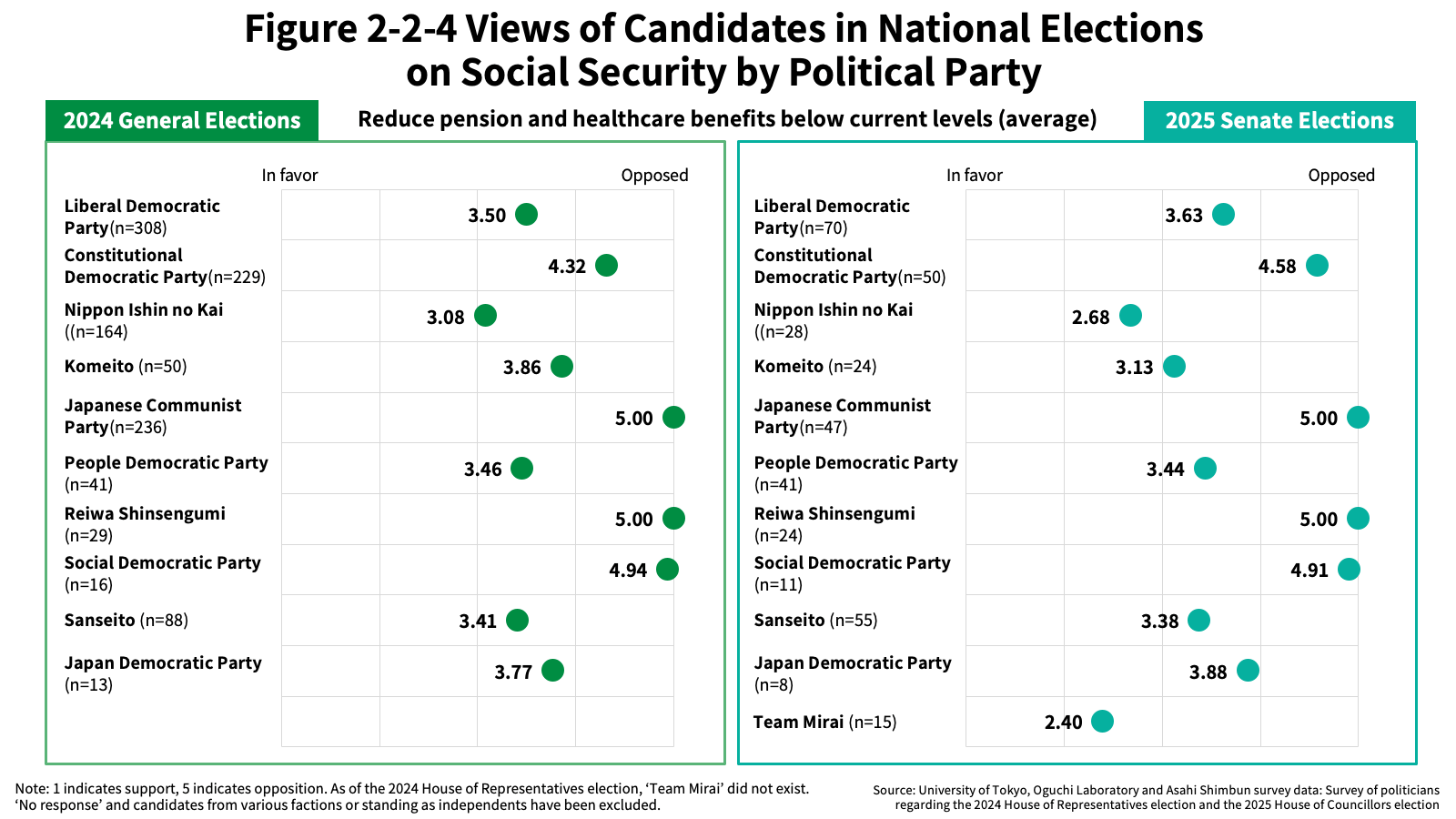
Political parties play an exceptionally important role in healthcare policymaking.[50] Each party adopts a distinct stance on healthcare policy issues, reflecting differing ideological orientations and policy priorities. Figure 2-2-4 presents the results of a questionnaire survey administered to candidates in the 2024 House of Representatives election and the 2025 House of Councilors election.
The survey asked respondents to indicate their level of agreement, on a five-point scale ranging from support to opposition, with the statement: “Benefits for pensions and medical care should be restrained below current levels.“ The average responses were aggregated and analyzed by political party, thereby illustrating inter-party differences in policy preferences regarding social security expenditure.
Liberal Democratic Party (LDP)
Since its founding in 1955, the Liberal Democratic Party (LDP) has served as the ruling party for much of Japan’s post-war period.[51] Owing to its sustained position in government, the LDP is widely regarded as a central stakeholder in healthcare policymaking. In particular, the party has maintained close relationships with professional associations such as the Japan Medical Association and various industry groups, thereby exerting significant influence over health policy formulation and implementation.
Within the LDP, so-called zoku giin, legislators with specialized expertise and long-standing involvement in specific policy areas, have traditionally wielded considerable influence over both policy decision-making and execution.[52] In the healthcare sector, members commonly referred to as kōrō zoku (health and labour policy groups) are known to exercise substantial influence over policies under the jurisdiction of the Ministry of Health, Labour and Welfare.
Societal Groups
In addition to governmental bodies and political parties, a wide range of societal stakeholders hold vested interests in healthcare policy and actively participate in the policy formation process. Key societal groups with strong relevance to healthcare policy include industry associations, health insurance–related organizations, and patient groups.
Representative industry associations include the Japan Medical Association, the Japan Dental Association, the Japan Pharmaceutical Association,[53] the Japan Nursing Association, and the Japan Pharmaceutical Manufacturers Association. Health insurance–related organizations include bodies such as the National Health Insurance Federation and the Social Insurance Medical Fee Payment Fund. Patient groups are typically organized around specific diseases and focus primarily on activities, such as peer support and the dissemination of disease-related information. Many of these organizations do not regard direct engagement in policymaking as their primary objective.
Japan Medical Association (JMA)
The Japan Medical Association (JMA) is an organization to which approximately 51.6 per cent of physicians in Japan[54] belong and is widely considered the most influential interest group in the field of healthcare policy. Through its close relationships with government officials, administrative bodies, and the Liberal Democratic Party, the JMA engages in activities aimed at safeguarding physicians’ professional autonomy and occupational interests.[55]
In addition, the JMA operates a political organization, the Japan Medical Federation, which for many years has successfully supported organizational candidates in elections to the House of Councilors. Several members of the Central Social Insurance Medical Council (Chūō Shakai Hoken Iryō Kyōgikai), the body responsible for determining medical service fees, are selected from among JMA representatives. Beyond formal institutional settings such as the Council, the JMA continues to engage actively in informal advocacy and lobbying activities. These efforts are widely regarded as exerting substantial influence over the drafting of healthcare-related legislation and deliberations on medical fee revisions.
- [18] Ministry of Health, Labour and Welfare, Understanding Insured Medical Treatment (FY2025 Edition), available at: https://www.mhlw.go.jp/content/001521412.pdf
- [19] An “Independent Administrative Institution” refers to a legal entity established to efficiently and effectively implement administrative functions and projects that are necessary from the perspective of public welfare and socio-economic stability, but which do not require direct implementation by the state itself, or which may not be adequately performed if left entirely to private actors, or which require exclusive implementation by a single entity (Act on General Rules for Incorporated Administrative Agencies, Article 2, Paragraph 1). Comparable systems in other countries include the United Kingdom’s “Executive Agencies”. See: Comparative Study on Systems of Independent Administrative Institutions in Other Countries. https://www.soumu.go.jp/main_content/000537355.pdf
- [20] Pharmaceuticals and Medical Devices Agency (PMDA), Overview of PMDA Operations, available at: https://www.pmda.go.jp/files/000219906.pdf
- [21] Cabinet Secretariat. Overview of the Cabinet Secretariat. Available at: https://www.cas.go.jp/jp/gaiyou/index.html
- [22] Cabinet Office. Organizational Chart of the Cabinet Office. Available at: https://www8.cao.go.jp/jinji/saiyo/pamphlet_2021_2.pdf
- [23] Japan Agency for Medical Research and Development (AMED). Overview of the Agency. Available at: https://www.amed.go.jp/aboutus/yakuwari.html
- [24] Ministry of Health, Labour and Welfare. The Origins of the Ministry of Health, Labour and Welfare. Available at: http://www.mhlw.go.jp/kouseiroudoushou/shigoto/dl/p03.pdf
- [25] Cabinet Secretariat. Comprehensive List of Councils. Available at: https://www.cas.go.jp/jp/gaiyou/jimu/jinjikyoku/satei_01_04_03.html
- [26] Ministry of Health, Labour and Welfare. List of Locations of Regional Bureaux of Health and Welfare. Available at: https://www.mhlw.go.jp/kouseiroudoushou/shozaiannai/chihoukouseikyoku.html
- [27] National Hospital Organization. About the National Hospital Organization. Available at: https://nho.hosp.go.jp/about/cnt1-0_000003.html
- [28] Ministry of Health, Labour and Welfare. Main Functions and Responsibilities. Available at: https://www.mhlw.go.jp/kouseiroudoushou/shigoto/
- [29] As illustrated by the anecdote that an American executive of a global pharmaceutical company was once advised, “If you were to remember just one Japanese technical term related to healthcare, it should be ‘Chu-i-kyo’,” the Central Social Insurance Medical Council (Chuikyo) is widely regarded as the most important and closely watched government advisory body in healthcare policy. Its deliberations are, in principle, open to the public, and public attendance is permitted. Public attention peaks in the period from the autumn of the preceding year to approximately February, ahead of the biennial medical fee revision implemented each April. During this period, detailed discussions on the revision are conducted, prompting healthcare professionals, journalists, and pharmaceutical company representatives to queue from early morning to secure limited observation tickets. Although seating is often limited to several dozen places, queues of over 100 people forming several hours before the start of proceedings have become a regular feature of Chuikyo meetings.
- [30] Ministry of Health, Labour and Welfare, About the Central Social Insurance Medical Council. http://www.mhlw.go.jp/shingi/2005/03/dl/s0309-4e3.pdf
- [31] Pharmaceuticals and Medical Devices Agency (PMDA), What is PMDA? https://www.pmda.go.jp/about-pmda/outline/0001.html
- [32] Pharmaceuticals and Medical Devices Agency (PMDA), PMDA Operations Guide. https://www.pmda.go.jp/files/000219906.pdf
- [33] Pharmaceuticals and Medical Devices Agency (PMDA), FY2023 Business Performance and Future Initiatives. https://www.pmda.go.jp/files/000273928.pdf
- [34] Ministry of Finance, Recruitment Brochure (Career Track Positions). https://www.mof.go.jp/about_mof/recruit/2025_mofpamphlet.pdf
- [35] Ikegami, N. (2014). Universal Health Coverage for Inclusive and Sustainable Development: Lessons from Japan. Japan Center for International Exchange. http://www.jcie.org/japan/j/pdf/pub/publst/1452/1452all.pdf
- [36] Ministry of Economy, Trade and Industry, Organizational Structure of the Ministry of Economy, Trade and Industry. https://www.meti.go.jp/intro/pdf/a_soshikizu.pdf
- [37] Ministry of Economy, Trade and Industry, Mission, Vision and Values of the Ministry of Economy, Trade and Industry. https://www.meti.go.jp/intro/mvv/index.html
- [38] Ministry of Economy, Trade and Industry, Healthcare Industry Policy at the Ministry of Economy, Trade and Industry. https://www.meti.go.jp/policy/mono_info_service/healthcare/01metihealthcarepolicy.pdf
- [39] Ministry of Economy, Trade and Industry, Biotechnology Policy. https://www.meti.go.jp/policy/mono_info_service/mono/bio/index.html
- [40] RIKEN (Institute of Physical and Chemical Research), About RIKEN. https://www.riken.jp/about/
- [41] Ministry of Education, Culture, Sports, Science and Technology, Overview of the Ministry of Education, Culture, Sports, Science and Technology. https://www.mext.go.jp/b_menu/b003.htm
- [42] Ministry of Education, Culture, Sports, Science and Technology, Organizational Structure. https://www.mext.go.jp/b_menu/soshiki2/top.htm
- [43] Ministry of Education, Culture, Sports, Science and Technology, Programs Related to Life Sciences Research. https://www.mext.go.jp/a_menu/lifescience/bioethics/mext_02555.html
- [44] Children and Families Agency, Organizational Information. https://www.cfa.go.jp/about
- [45] Children and Families Agency, Policies on Maternal and Child Health, Infertility, and Recurrent Pregnancy Loss. https://www.cfa.go.jp/policies/boshihoken
- [46] Ministry of Health, Labour and Welfare, Medical Care Plans. https://www.mhlw.go.jp/stf/seisakunitsuite/bunya/kenkou_iryou/iryou/iryou_keikaku/index.html
- [47] The Regional Healthcare Vision is a strategic framework designed to ensure the efficient provision of high-quality and appropriate medical care by promoting functional differentiation and coordination among medical institutions. It is formulated in response to medium- to long-term changes in population structure and in both the qualitative and quantitative dimensions of regional healthcare needs. Prefectural governments are required to formulate medical care plans every five years in order to realize this vision. The implementation of these plans involves a wide range of actors, including municipalities and other local government bodies, as well as diverse stakeholders across the healthcare sector.
- [48] Ministry of Health, Labour and Welfare, Community Health. http://www.mhlw.go.jp/stf/seisakunitsuite/bunya/tiiki/index.html Note that general municipalities (i.e. those other than core cities) are not permitted to establish public health centers; consequently, community health activities in such municipalities are undertaken by municipal health centers.
- [49] The organizational structure of public health centers is centered on a Director of the Public Health Centre (who must hold a medical or dental qualification; see Article 7 of the Community Health Act), supported by specialized professionals in areas such as medical hygiene, environmental hygiene, mental health, and maternal and child health (including public health nurses, pharmacists, and registered dietitians).
- [50] Data from the University of Tokyo Taniguchi Laboratory–Asahi Survey of Politicians were used, based on surveys conducted during the 2024 House of Representatives election and the 2025 House of Councilors election.
- [51] Since its founding, the Liberal Democratic Party (LDP) has remained almost continuously in power as the governing party, with the exception of an eleven-month period between 1993 and 1994 and a period of approximately three years between 2009 and 2011.
- [52] Iio, Jun (2007). Japan’s System of Governance: From a Bureaucratic Cabinet System to a Parliamentary Cabinet System. Chūō Kōron Shinsha.
- [53] It should be noted that the Japan Medical Association, the Japan Dental Association, and the Japan Pharmaceutical Association are collectively referred to as the “Three Medical Associations” (Sanshikai), and they are regarded as having a relatively strong presence among healthcare-related organizations.
- [54] Japan Medical Association, Prefectural Membership Rates of Medical Associations for FY2024 (as of January 2025).
- [55] Ikegami, Naoki (2014). Universal Health Coverage for Inclusive and Sustainable Development: Lessons from Japan. Japan Center for International Exchange. http://www.jcie.org/japan/j/pdf/pub/publst/1452/1452all.pdf